 Startups
 Fintech
 Healthcare
 Manufacturing
 Marketplaces
 Mortgage
 Real Estate
 Retail
 Sports and Fitness
 Telecom and IT
 Logistic
 SaaS Product


 About Us
 Blog
Blog Careers
 Become A Partner
 Contact



UI / UX / CX
Brand-aligned digital experiences designed for specific audiences from first impression to conversion.
Learn More about UI / UX / CX
 About Us
 Blog
Blog Careers
 Become A Partner
 Contact
Connecting People With Technology
Solvios is the leading IT company in the business to give you growth, revenue, and a global platform.
The client is a direct-to-consumer ecommerce brand selling sacred Egyptian oils. They came to Solvios running a standard Shopify storefront that looked like every other templated store in the wellness category, with no way to educate first-time buyers or answer product questions outside business hours. They wanted a store that carried the weight of the brand's story, not just a checkout page.
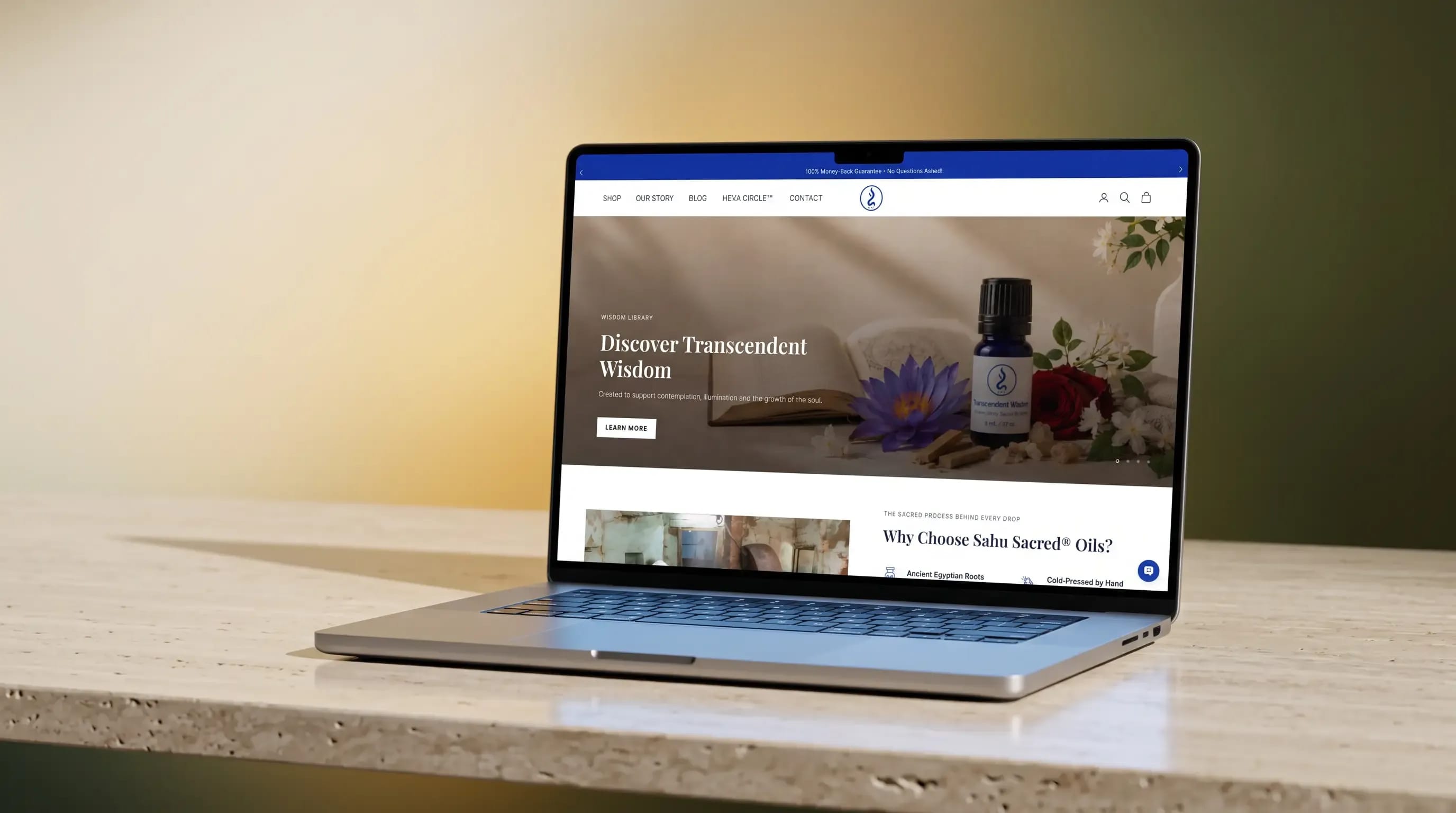
An Egyptian sacred oils ecommerce brand
1 Month
Ecommerce (D2C, Wellness & Personal Care)
Egypt
The client, an Egyptian sacred oils brand selling through Shopify, needed more than a storefront. Solvios rebuilt the site with brand-aligned UI/UX and added a multilingual AI chatbot that answers product questions and guides purchase decisions. Within weeks of launch, the store saw a 30% increase in orders and the chatbot resolved 90% of customer queries without human support.
A generic Shopify template that didn't reflect the brand's story or positioning
No way for first-time buyers to learn product origin, use cases, or how to choose between products
Customer support limited to business hours, with no coverage for repetitive pre-purchase questions
No conversational layer to guide shoppers who needed more than a product description
Inconsistent design language between the storefront and campaign landing pages
No structured product knowledge base to support future AI or search features
The brand had already validated demand. It had orders coming in and a returning customer base, the site just wasn't doing its job as the storefront for a premium wellness product. Visitors landed on pages built off a stock theme with none of the brand's own visual identity.
No chatbot or conversational support anywhere on the site
Product pages listing specs but skipping the "why this oil, why now" context buyers actually needed
Zero accessibility optimization across pages
No connective design system between the storefront and marketing landing pages
Support queries handled manually, one email or DM at a time
No data loop to tell the team which questions customers were actually asking

A new theme or a chatbot plugin on its own wouldn't have solved this. The client needed the store to actually think like a knowledgeable salesperson, not fake one with a widget.
A Storefront With Nothing to Say
The client wanted a site that stood beyond the traditional Shopify experience, one that assisted visitors through the entire shopping journey instead of stopping at a product grid. Most of the theme's default pages didn't earn that trust.
No Way to Answer Questions in Real Time
There was no real-time customer engagement anywhere on the site. Every pre-purchase question funneled to email, and by the time an answer came back, a chunk of visitors had already left.
Knowledge Locked in One Person's Head
Product knowledge, origin, use cases, how to pick between similar oils, lived with the founder, not on the pages. Scaling support meant scaling that knowledge, and there was no structure to do it.
A Brand Identity the Site Didn't Reflect
Sacred Egyptian oils carry cultural and sensory weight that a default Shopify theme can't communicate. The mismatch between the product's positioning and the storefront's look was costing trust before a single sale happened.
The first call we made was structural: don't bolt a chatbot onto the existing theme. Rebuild the storefront and the conversational layer together, so the design and the AI point back to the same brand story.
Before touching a single page, we sat with the client to log the questions customers were already asking by email and DM. That list became the backbone of both the new product pages and the chatbot's training data.
We re-designed the storefront using the brand's own colors, typography, and tone, then carried that same design language into the landing pages so the two didn't feel like separate products stitched together.
Every product page got rewritten to cover origin, use case, and how to choose between similar oils, giving visitors the same context a knowledgeable in-store salesperson would.
Rather than a generic FAQ bot, we built a chatbot backed by a structured knowledge base of the brand's own products, so it understands synonyms, multi-line questions, and more than one language.
Design and accessibility work happened in the same pass, not as a follow-up ticket, so the finished store didn't trade one improvement for another.

The final build combined a redesigned storefront with an AI layer that earns its place on the page, rather than sitting in the corner as a widget nobody clicks.

Every product page now carries origin, sourcing, and use-case content instead of a bare spec sheet, written to answer the questions that used to go to email.

A chatbot trained on the brand's own product data, able to understand common language variations, synonyms, and multi-line questions, not just exact-match keywords.

A redesigned storefront and landing page system sharing one visual language, built around the brand's own identity instead of a stock Shopify theme.

An internal library connecting product attributes to the recommendations the chatbot and the product pages both draw from, so answers stay consistent across the site.

Pages tuned for load speed and accessibility standards, done in the same build pass as the visual redesign instead of a retrofit afterward.

The chatbot's interaction data now feeds back into product content, giving the team a data-backed way to see which questions are still going unanswered.
The numbers below cover the first few weeks after launch, the period where a redesign either proves itself or doesn't.

90% - Support Queries Resolved by AI
Customer queries answered directly by the chatbot, without a human stepping in, across product questions and pre-purchase concerns.

30% - Increase in Orders
Attributed to the design overhaul and improved shopping experience within the first few weeks after launch.

24/7 - Shopping Guidance With No Support Queue
The chatbot answers product questions in multiple languages any time a visitor is on the site, instead of waiting on business-hours support.

Zero - Repetitive Pre-Purchase Emails Left Unanswered
Story-led product pages and the structured knowledge base closed most of the gap that used to generate one-off support tickets.

1 - Unified Design Language Across the Storefront
Storefront and landing pages now share one visual system instead of running on a patched-together mix of theme defaults and campaign pages. None of this replaced the founder's product knowledge, it just gave that knowledge a place to live outside one person's inbox. The store now does the explaining a good salesperson would have done in person.
"Solvios delivered a high-quality website on time and within budget, meeting expectations. The team managed expectations well, communicated effectively, and was highly accessible and responsive. Their honesty, integrity, excellent customer support, and attention to detail stood out."
— Jim, Founder, an Egyptian sacred oils ecommerce brand
If your Shopify store is carrying real demand but not doing the explaining your product actually needs, this is the kind of rebuild we run often, design and AI shipped together, not stitched on after the fact. Response within 24 hours. No commitment required.

A one-month timeline doesn't leave room for a slow start. Here's how the four-week build actually broke down.

We logged the client's existing support questions and mapped the buyer journey before any design work started, so the rebuild was based on real customer behavior, not assumptions.

Redesigning the storefront's visual language and rewriting product page structure to carry origin and use-case content, run in parallel with early chatbot planning.

Implementing the new design across the storefront and landing pages, matched to the brand's colors, typography, and tone.

Building the chatbot against a structured product knowledge base, training it to handle synonyms, multi-line, and multi-language queries.

Cross-device testing, accessibility checks, and a phased launch, followed by handover documentation so the client's team could manage content going forward.
This engagement ran four weeks from discovery to launch, which is realistic for a Shopify rebuild paired with a custom AI chatbot, provided the product catalog and brand assets are already in place. The timeline compresses further when design and chatbot training run in parallel rather than sequentially, which is how this project stayed inside a month. Larger catalogs, additional language requirements beyond what's already scoped, or a from-scratch brand identity would extend that window. A realistic range for a comparable single-store build is four to eight weeks, depending on how much of the product knowledge already exists in a usable, structured form.
Most off-the-shelf chatbot plugins run on generic FAQ matching and break the moment a customer phrases a question differently than expected. The assistant built here runs on a structured knowledge base of the brand's own products, so it understands synonyms, multi-line questions, and more than one language instead of exact-match keywords. It also feeds interaction data back into the product content, giving the team visibility into what customers are actually asking. That difference is why it resolved 90% of queries without a human, rather than deflecting customers into a support queue anyway.
A design overhaul on its own can lift conversion; cleaner navigation and clearer product information reduce drop-off regardless of AI. But in this case, the 30% increase in orders came from the design and the chatbot working together: better-structured pages reduced confusion, and the chatbot caught the questions that structure alone couldn't answer. Isolating one variable from the other after a combined launch is difficult, which is a fair caveat, but the pattern holds across similar builds: content clarity plus real-time guidance outperforms either change made alone.
For repetitive, pattern-based questions, product origin, use cases, sizing, and how to choose between similar items, yes, an AI chatbot trained on structured product data can handle the bulk of it, as shown by the 90% resolution rate here. It's not a full replacement for human support on edge cases, order disputes, or anything requiring judgment calls outside the product catalog. The realistic framing is that it absorbs the repetitive pre-purchase load so human support time goes toward the harder, less frequent questions instead.
It starts with structuring the product knowledge the chatbot will draw from, not the chatbot interface itself. That means mapping product attributes, common customer questions, and language variations into a format the AI can query consistently. From there, the chatbot is trained against that structured base and tested against real customer phrasing, not just expected keywords. For an existing Shopify store, this usually runs alongside a content or design pass, since the same knowledge base often powers both the product pages and the assistant.
Didn't Find What You Were Looking For?
Get In Touch With Our Experts


We'd love to understand what you want to build. The more context you share, the faster we can give you a useful response not a sales pitch, but a genuine assessment of how we can help and what working together would look like.


Solvios is a leading software development company crafting innovative solutions for businesses. We Specialize in custom software, web & mobile app development, and digital marketing. Partner with us to transform your vision into reality and achieve digital success.


