Custom Web Apps
Bespoke web applications built from scratch for unique business requirements full-stack engineering, custom architecture and the kind of development that doesn't try to force your problem into an off-the-shelf solution.
Learn MoreYears of Experience
Experts in Our Team
Happy Customers Worldwide
Projects Delivered Successfully
4.9/5 ratings
5/5 ratings

Whether you’re designing a product from scratch, fixing a UX that’s bleeding users at onboarding, building a design system that holds across ten engineers and thirty screens or shipping a frontend that actually matches the Figma file, our UI UX design services cover every layer of the product design and development lifecycle. Strategy to pixels to production, delivered by designers and engineers who’ve shipped real products at real scale.
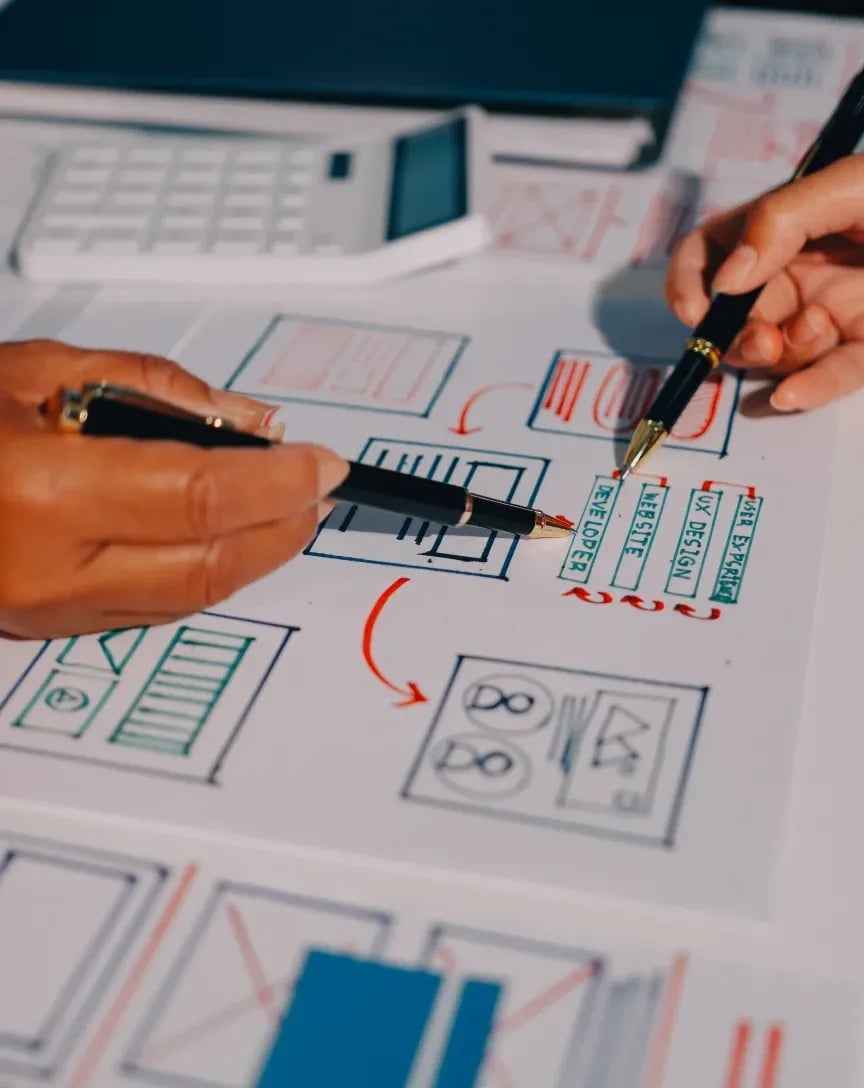
Most design projects fail before a single wireframe is drawn. They fail because nobody asked the hard questions early enough: who actually uses this, what are they trying to accomplish, where are they dropping off and why. We run structured UX research and product strategy engagements that give you those answers before the design work starts. User interviews, behavioral analytics audits, competitive UX benchmarking, jobs-to-be-done mapping and information architecture that’s grounded in evidence, not assumption. The output is a research report your designers, engineers and product team can all execute against, not a slide deck that earns a nod and gets filed.
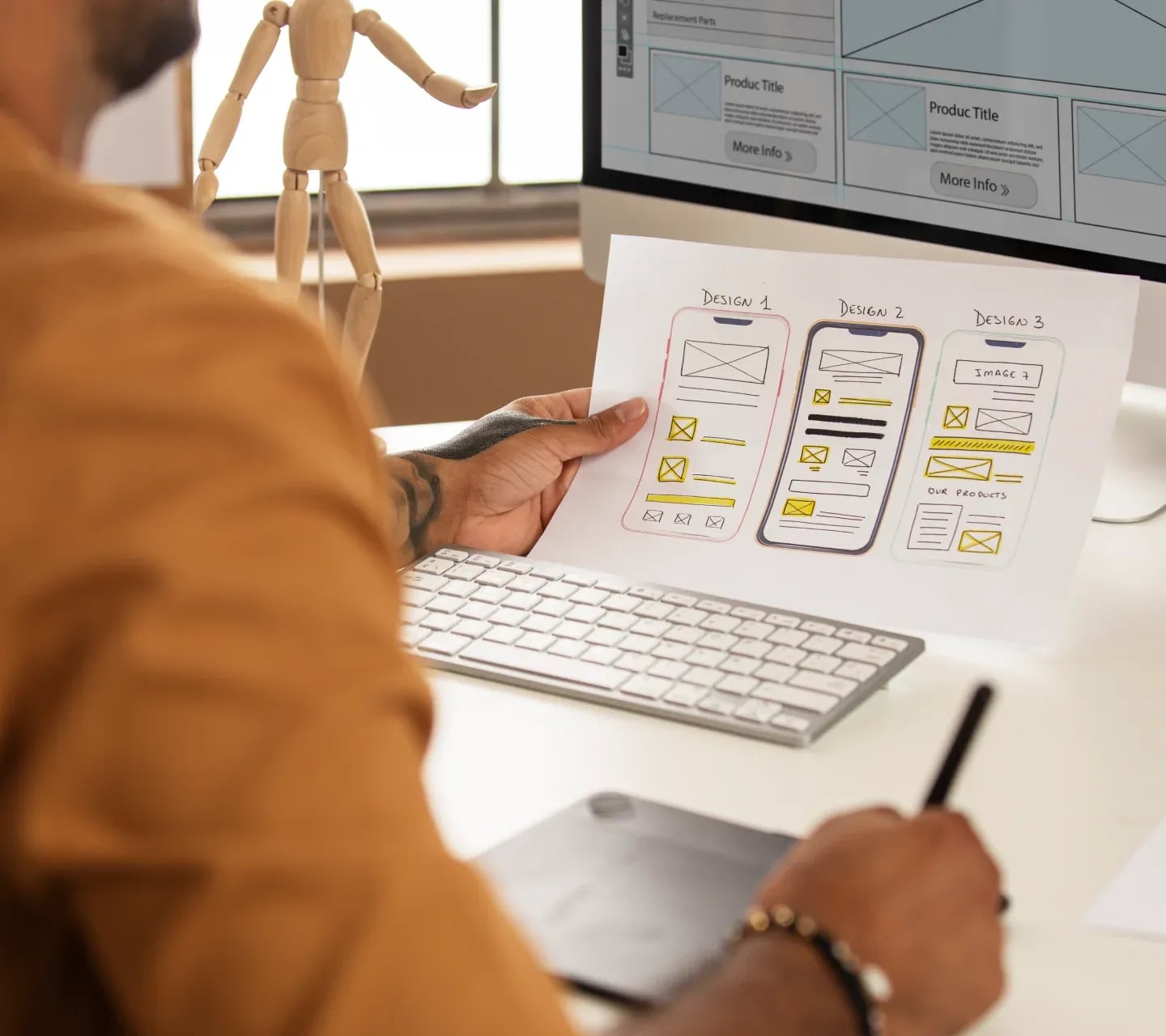
A UI that looks good in Figma but breaks in production, across devices or at the hands of a second designer is a UI that wasn’t engineered. We design interfaces with design systems thinking from day one: atomic component libraries, consistent token architecture, responsive behaviour defined at the component level and documentation engineers actually read. Whether you need a full product design from zero or a design system that brings consistency to an existing product that’s drifted across three years of sprint cycles, we build it to be maintained, not just delivered.
If your product has a retention problem, a conversion problem or just a ‘users complain but we can’t pinpoint why’ problem, a UX audit is usually where the answer lives. We conduct heuristic evaluations, funnel drop-off analysis, session recording reviews and accessibility assessments against WCAG 2.2 AA to produce a prioritized list of what’s costing you users and revenue. Then we fix it. Redesigns are sequenced by business impact, not by what’s easiest to change, and validated through usability testing before they ship.
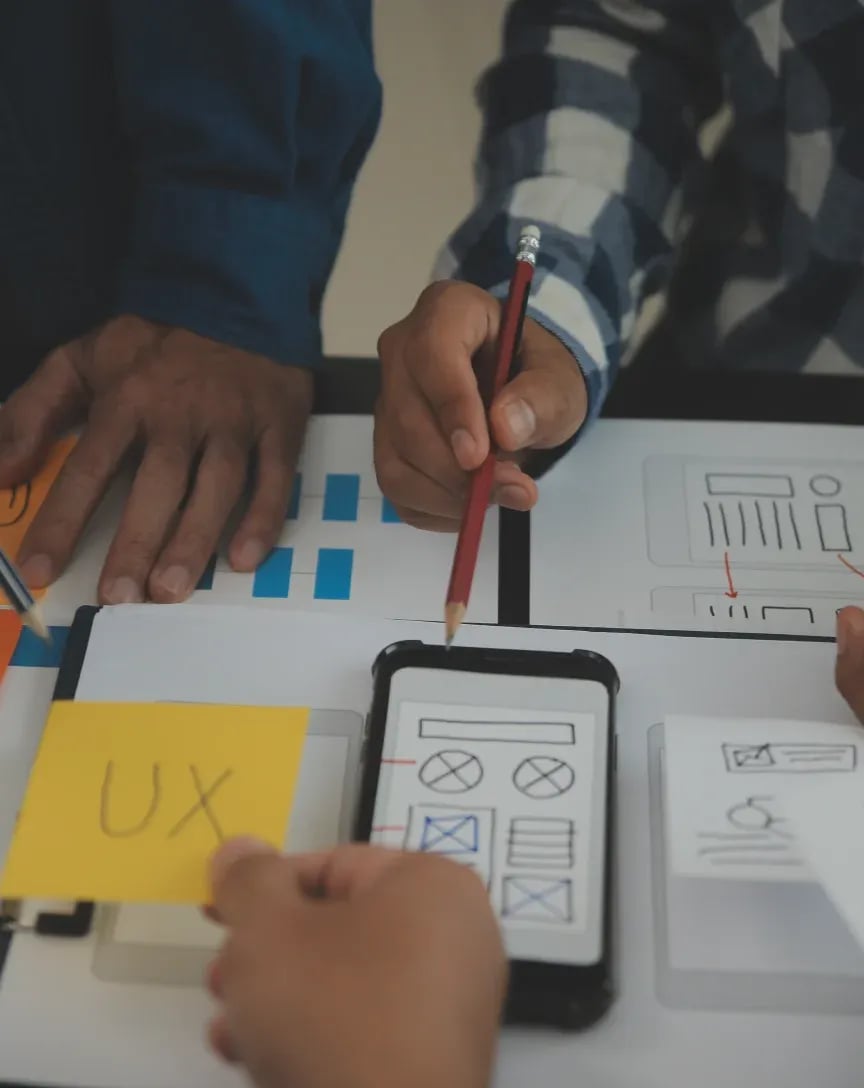
Decisions made in a prototype cost a fraction of decisions made in production. We build interactive prototypes in Figma that go well beyond clickable wireframes: realistic interaction flows, micro-animations, gesture-based navigation, conditional logic and the kind of prototype fidelity that lets you run real usability tests before a single line of code is written. The output isn’t a demo for a board meeting. It’s the single source of truth your engineering team uses to build.
Design that stops at the Figma file is only half the work. We build production frontend code that matches the design with the kind of precision most design-to-development handoffs never achieve. React, Next.js, Vue, TypeScript, Tailwind and the CSS architecture that keeps the component library maintainable as the product scales. Accessibility baked in from day one, performance optimized for Core Web Vitals and the CI/CD integration that means your design system and your codebase stay in sync across releases.
Mobile design is its own discipline. Platform conventions differ, touch targets matter, one-thumb navigation is a real constraint and the pixel-perfect spec means nothing if the app doesn’t feel right on the device. We design mobile interfaces that respect Material 3 on Android and Cupertino guidelines on iOS while sharing a unified design system underneath. Cross-platform consistency, native feel on each platform and the kind of mobile UX thinking that comes from designers who’ve shipped consumer apps, not just web products with a smaller viewport.
AI changes what a product can do and what users expect it to do. Streaming interfaces, AI-powered search, conversational flows, adaptive UI that responds to user behaviour and the kind of human-AI interaction design that makes generative features feel like a natural part of the product rather than a chatbot bolted onto the nav. As an AI-integrated design company, we design and build AI-native product experiences from the interaction model through to the frontend implementation. No prompt wrappers dressed up as products. Actual AI-integrated design that earns its place in the UI.
Most design shops use AI to generate mood boards and name color palettes. We use it as a serious layer in how research is synthesized, how design decisions are validated and how the gap between design and production gets closed. Every layer below is engineered as a first-class part of how we design and build, not an experiment in the corner.

AI-assisted synthesis of user interview transcripts, session recordings, heuristic evaluation notes and analytics data surfaces the patterns and priorities that manual analysis misses or takes too long to find.
Highlights:

AI-assisted synthesis of user interview transcripts, session recordings, heuristic evaluation notes and analytics data surfaces the patterns and priorities that manual analysis misses or takes too long to find.
Highlights:
UI UX design isn’t one capability. It’s a category spanning user research, information architecture, interaction design, visual design, design systems, accessibility engineering, prototyping and the frontend development that closes the gap between what was designed and what shipped. Here are the capabilities we deliver and the bar we hold ourselves to on each one.

We’re not just another UI UX design company. We’re the AI-integrated design and development partner you bring in when the product experience, the design system discipline and the gap between Figma and production are no longer acceptable to leave unsolved.
Our designers and frontend engineers work in the same team, on the same sprint, against the same definition of done. No handoff problem. No lost detail between the Figma file and the component library. What’s designed is what ships.
You get product designers who’ve shipped consumer apps, enterprise platforms and SaaS products at real scale, not juniors learning Figma Auto Layout on your product roadmap.
AI-native interaction design, AI-assisted research synthesis and AI-augmented frontend development are built into how we work, not bolted on as a ‘we do AI too’ tagline.
Every engagement starts with an honest look at what users actually do, not what stakeholders assume they do. UX decisions are grounded in evidence. Design changes are sequenced by business impact.
WCAG 2.2 AA compliance is a design constraint, not an afterthought. Accessibility review runs in parallel with visual design across every engagement, not as a remediation pass before launch.
We design for AI-native interfaces, voice and multimodal experiences, design tokens at scale and the interaction patterns that are defining the next generation of digital products, not just the visual trends that were current at the last Awwwards.
Most design projects don’t fail because of bad designers. They fail because the research never happened, the prototype was never tested with real users or the frontend received a Figma file and a ‘good luck’. Our AI-integrated UI UX design services follow a structured, research-backed delivery methodology designed to catch those failures before they ship.
Here’s exactly how it works.
We audit your existing product or concept, your users, your analytics and your competitors to ground every design decision in evidence from the start. No assumption-driven wireframes.
We define the product structure, user flows and content hierarchy that make the design work before anyone opens Figma. IA decisions made here are cheaper than IA decisions made in development.
We build interactive prototypes that are high enough fidelity to run real usability tests and low enough cost to change before engineering starts. The prototype is the single source of truth, not the first deliverable.
We design the visual layer with a component-first approach: tokens, atoms, molecules and organisms built to be maintained by a real product team across a real product lifecycle, not just for the first release.
Our engineers build the production frontend against the design system with the same precision the design team applied in Figma. Accessibility, performance and CI/CD integration are not optional at this stage.
We run cross-device and cross-browser QA, document everything the in-house team needs to maintain the design system and provide ongoing support through the SDK upgrades, product changes and design iterations that follow every launch.
Your design and development engagement doesn’t fit a template, and the contract shouldn’t either. The right way to hire a UI UX design company depends on your product stage, your scope and your in-house team’s depth. Three models, all built for product-era delivery speeds.
You’re building a complex product over six months or more, your design system needs to scale across a growing engineering team or you need to hire senior UI UX designers and frontend engineers without the cost and lead time of full-time hires.
Hand-picked product designers, UX researchers, interaction designers and frontend engineers all working only on your product. Sprint planning, design reviews and QA sign-offs run on your calendar and your tooling.
Monthly retainer. No surprise invoices, no scope-creep billing. Team composition flexes as your product roadmap demands.
3 to 10 designers and engineers
6-month minimum
Scales with 30-day notice

Building Product Design Foundations for the Businesses That Will Define the Next Decade. The companies that invest in research-driven, AI-integrated product design now won’t be the ones rebuilding their UX from scratch because onboarding failed, conversion dropped or the design system became unmaintainable.

Sub Head: Product design challenges look different across industries. The compliance posture, the user literacy assumptions, the performance requirements and the trust signals that make or break conversion all change the engineering. These are the verticals where we’ve designed and shipped products in production.

Honest answers to the questions every founder, CPO, head of product and head of engineering asks before they hire a UI UX design company. If something isn’t covered here, our solution architects will walk you through it on a discovery call, no sales pitch, no fluff.
Look beyond the portfolio. The right UI UX design company asks more questions than it answers in the first conversation: about your users, your analytics, your team’s design depth and what a bad UX experience is actually costing you in conversion and retention. Evaluate on research rigor in the discovery phase, design system thinking, whether they can take the design through to production without a handoff problem and whether they push back constructively when they disagree. Anyone who recommends a design direction before they’ve understood your users isn’t the right partner.
Full-suite UI UX design services cover UX research and user interviews, product strategy, information architecture, wireframing, interactive prototyping, usability testing, UI design, design system creation, interaction design and, where the engagement calls for it, production frontend development. The best engagements also include a discovery and UX audit before any design work starts because the decisions made in week one determine the design debt you carry for years.
A focused UX audit or design sprint: $8,000 to $25,000. A mid-complexity product design from wireframes through to a production-ready design system: $30,000 to $120,000. A full product design and frontend development engagement for an enterprise SaaS or consumer app: $150,000 to $500,000+. The number that matters isn’t the design cost, it’s the conversion and retention value a well-designed product generates versus a product nobody wants to use. We provide detailed estimates after a discovery session and won’t give you a number before we can stand behind it.
A focused UX audit and redesign sprint: 3 to 6 weeks. A mid-complexity product design from research through to a validated prototype: 6 to 12 weeks. A full product design and design system build: 3 to 6 months. A design and frontend development engagement: 4 to 9 months depending on scope. We provide milestone-based timelines in writing before the engagement begins.
UX design is how a product works: the flows, the hierarchy, the information architecture and the logic that determines what a user can do and how they get there. UI design is how a product looks: the visual language, the typography, the color, the components and the design system that makes the product look like one thing across every screen. In practice, the two can’t be meaningfully separated on a real product. A UI that looks good with broken flows is still a bad product. We treat them as one discipline, not two handoffs.
Three models: Dedicated Design and Development Team (for long-term, evolving products), Time and Material (for iterative product design and exploratory builds) and Fixed Cost (for well-scoped, budget-defined design projects). When you hire UI UX designers from us, we recommend honestly based on your situation, not based on which model generates the most billing.
Yes. Frontend development is a core part of our UI UX design services, not an optional add-on. Our designers and engineers work as a single practice in React, Next.js, Vue and TypeScript with the same design system driving both the Figma file and the component library. The gap between what’s designed and what ships is where most design work quietly loses its value. We close that gap.
AI-integrated design means two things in practice. First, using AI inside our design workflow to accelerate research synthesis, accessibility checking, design-to-code accuracy and usability analysis. Second, designing product experiences that incorporate AI features: streaming interfaces, conversational flows, AI-powered search and the interaction patterns that make generative AI feel like a natural part of the product rather than a chatbot appended to the nav. If your product roadmap includes AI features in the next twelve months, designing for them from the start is cheaper than retrofitting them into a product that wasn’t built to hold them.
Yes. We run a design audit first: Figma file quality, component library state, design system documentation, accessibility posture, UX research coverage and the accumulated inconsistencies that most products develop over time. We give you an honest picture of what you’ve inherited and a clear recommendation for what to do about it. Sometimes the answer is to extend and systematize. Sometimes it’s a redesign. Sometimes the existing work is better than it looks and the right move is to build on it.
Accessibility is a design constraint, not a QA task. WCAG 2.2 AA compliance is checked during the design phase through automated contrast analysis, focus order review, touch target sizing and screen reader flow validation, so the engineering team receives designs that are accessible by default. For healthcare, fintech and government-adjacent products we apply WCAG 2.2 AA as a hard requirement from day one, not a consideration before launch.
Yes. Mobile UI/UX is a core part of our UI UX design services. We design for iOS and Android natively, respecting platform conventions on each while sharing design system components underneath. Responsive web design across desktop, tablet and mobile, native app design for iOS and Android and cross-platform products that need to feel right on every surface without running two parallel codebases are all well within scope.
Against the metrics that matter to your business, not against design awards. User activation rate, onboarding completion, feature adoption, conversion rate, session length, NPS and the WCAG compliance posture you can actually defend to a regulator. We set success metrics at the start of the engagement and track them through delivery. Design decisions that can’t be traced to a business outcome don’t ship.
Didn't Find What You Were Looking For?
Get In Touch With Our ExpertsCurated insights, research frameworks and best practices on UX research, design systems, AI-integrated design, frontend performance and product design strategy written to help you build smarter, retain longer and stay ahead of where product design is headed next.
We'd love to understand what you want to build. The more context you share, the faster we can give you a useful response not a sales pitch, but a genuine assessment of how we can help and what working together would look like.