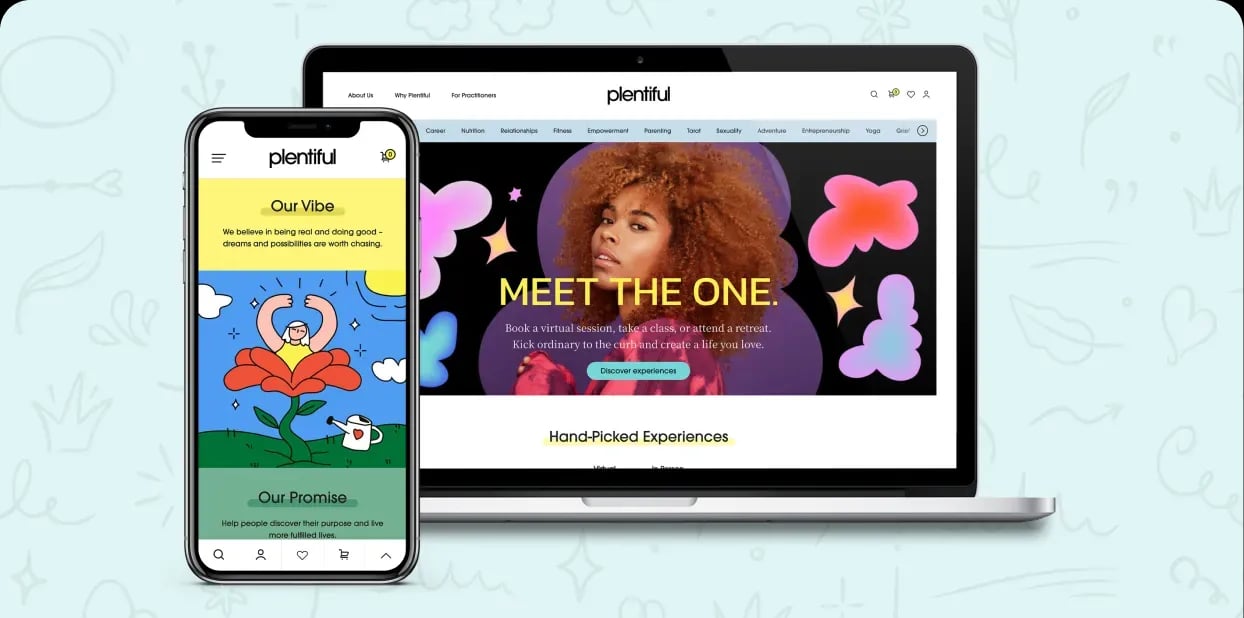
How We Turned A Fragmented Wellness Booking Process Into One Trusted Marketplace

The client runs a wellness and coaching marketplace built to connect practitioners with the people looking for them, across sessions, classes, workshops, and retreats. Before this project, most of that connection happened through phone calls, email threads, and spreadsheets, with no real platform behind it.

How We Turned A Fragmented Wellness Booking Process Into One Trusted Marketplace
Client

Wellness & coaching marketplace platform

Duration

10 Months

Industry

eCommerce

Country

United States

The Challenge They Brought to the Table

The client is a wellness and coaching marketplace connecting practitioners with clients across sessions, classes, and retreats. Before this project, there was no way for practitioners to list services, manage bookings, or get paid without relying on spreadsheets and back and forth emails. Solvios built a WordPress and Laravel powered e-commerce platform with vendor onboarding, Google Calendar scheduling, and integrated payments. The result: practitioners can list, book, and get paid from one place, instead of coordinating everything by hand.

No centralized place for practitioners to list sessions, classes, workshops, or retreats

Booking handled manually through calls, emails, and spreadsheets

No shared calendar system between practitioners and clients

Payments collected outside the platform, with little transparency for either side

No way to verify a practitioner's credentials before a client booked a session

Practitioners running offline practices had no path to reach a wider audience

The Situation When Solvios Stepped In

The client had a clear vision: a marketplace where practitioners across wellness and coaching could list what they offer and get discovered by the right clients. What existed on the ground was a handful of landing pages and a lot of manual coordination happening behind the scenes.

No functioning booking engine, just contact forms and manual follow up

No vendor accounts or dashboards for practitioners to manage their own listings

No integrated payment processing for card or digital wallets

No calendar sync, so double bookings and missed sessions were common

No admin tooling to manage disputes, refunds, or vendor commissions

No verification layer, so clients had no way to confirm a practitioner's credentials before paying

key challenges background

The Problem That Needed More Than a Quick Fix

Wellness marketplaces run on trust and convenience, and the client had neither built in yet. A booking plugin bolted onto an existing site was not going to close a gap this structural. Four problems in particular shaped how we approached the build.

No Central Discovery Layer

Without a searchable, directory style front end, practitioners could not be found and clients had no easy way to compare sessions, classes, or retreats side by side.


Manual, Error-Prone Booking

Every booking went through email or phone, which meant double bookings, missed sessions, and no shared record of what had actually been scheduled.


Fragmented, Untrusted Payments

Practitioners collected payment on their own outside the platform, which left no commission tracking for the business and no purchase protection for clients.


No Way to Vet Practitioners

With no verification step, clients had to take a practitioner's credentials on faith, which slowed trust and made it harder for new practitioners to land a first booking.


How We Approached It?

The first real decision was less about picking a plugin and more about picking a foundation that could support three different types of users, admin, vendor, and buyer, without turning into an unmanageable pile of custom code.

Build On WordPress, Extend With Laravel

Rather than force every feature into WordPress, we used it for content and the storefront, then handled the more transactional logic, vendor accounts, scheduling, payments, through a Laravel based layer, so each side of the platform runs on the tool suited to it.

Design A Vendor-First Onboarding Flow

Since practitioners are the supply side of the marketplace, we designed onboarding first: a guided, low friction wizard that gets a non-technical practitioner from signup to a live listing without a developer or a support ticket.

Wire Up Google Calendar Early

Scheduling was the biggest source of the client's manual overhead, so we connected each vendor account to their own Google Calendar from day one instead of treating it as a later phase add-on.

Centralize Payments Through One Gateway

We integrated a single payment gateway that supports card, Apple Pay, and Google Pay, so every transaction on the platform runs through one system the client can actually reconcile and report on.

Give Admin Real Operational Control

Commission adjustments, refunds, and vendor or event cancellations all needed a home outside of direct database access, so we built an admin panel that gives the client's team day to day control without touching code.

filter list background

What We Built & Delivered

Six pieces make up the platform today, and each one solves a specific problem from the list above.

Vendor Onboarding Wizard

Vendor Onboarding Wizard

A guided, gamified signup flow that walks non-technical practitioners through profile setup, service listings, and pricing without a single support call.

Multi-Method Payment Gateway

Multi-Method Payment Gateway

Checkout supports card, Apple Pay, and Google Pay, with every transaction routed through one system the client can reconcile.

Google Calendar-Synced Scheduling

Google Calendar-Synced Scheduling

Each vendor's calendar syncs directly with the platform, so events can be added, updated, or removed from either side without a double booking.

Practitioner Verification & Vetting

Practitioner Verification & Vetting

Document verification runs through the admin panel and results in a visible verification badge on a practitioner's public profile.

Commission & Payout Management

Commission & Payout Management

Admin can adjust vendor commission rates and track payouts per vendor, instead of working it out manually after each booking cycle.

Review & Ratings Layer

Review & Ratings Layer

Clients can leave reviews tied to a specific booking, giving new practitioners a way to build trust without an existing following.

What Changed After We Shipped?

The platform went from concept to a working, two sided marketplace, and the shift showed up in ways that go beyond a redesigned homepage.

Live - Two-Sided Marketplace

Live - Two-Sided Marketplace

Practitioners and clients now operate on one platform instead of scattered spreadsheets, DMs, and phone calls.

3 - Payment Methods Supported

3 - Payment Methods Supported

Card, Apple Pay, and Google Pay checkout gave clients more ways to pay and gave the business one place to track revenue.

1 - Connected Calendar Per Vendor

1 - Connected Calendar Per Vendor

Google Calendar sync removed the back and forth that used to cause double bookings and missed sessions.

100% - Vendor Listings Verified Before Going Live

100% - Vendor Listings Verified Before Going Live

Every practitioner profile goes through document verification before it is visible to clients, which was not possible before.

10 - Months From Kickoff To Launch

10 - Months From Kickoff To Launch

One project manager, one UI/UX designer, one HTML developer, two WordPress and PHP developers, and one QA analyst delivered the full platform in ten months. None of these numbers matter in isolation. What matters is that the client went from a concept practitioners had to be talked into trusting, to a marketplace people actually book through, which was the point of the project from the start.

Thinking About Building A Marketplace Of Your Own?

If you are sitting on a concept for a multi-vendor platform, wellness or otherwise, the hardest part is usually the scheduling, payments, and verification logic underneath the storefront. Response within 24 hours. No commitment required.

Talk to us about your project
Thinking About Building A Marketplace Of Your Own?

Solvios not only built a new website for us, but also delivered a logo and marketing campaigns alongside it. The management understood our needs, big or small, and the team clearly understood our industry.

Heinz, Founder, a wellness and coaching marketplace platform

How the Engagement Ran

Ten months is enough time to build something solid, but only if the sequence is right. Here is roughly how the work broke down.

Discovery & Architecture
01

Discovery & Architecture

Mapping the three user roles, admin, vendor, and buyer, scoping the WordPress and Laravel split, and locking down the core booking and payment flows before any UI work started.

Design & Vendor Flow
02

Design & Vendor Flow

UI/UX design for the storefront and the vendor onboarding wizard, tested with early feedback before development began in earnest.

Core Build
03

Core Build

The WordPress and PHP developers and the HTML developer built the storefront, vendor dashboard, and admin panel in parallel tracks.

Integrations
04

Integrations

Payment gateway, Google Calendar sync, and the document verification flow were wired in and tested against real booking scenarios.

QA & Launch
05

QA & Launch

The QA analyst ran the platform through booking, payment, and cancellation edge cases before the client's team took it live.

Related Case Studies

filter list background

Frequently Asked Questions

Building a multi-vendor wellness marketplace means designing for three distinct users at once: the admin running the business, vendors listing their services, and clients booking sessions. Beyond a storefront, the platform needs vendor onboarding, a scheduling system that avoids double bookings, payment processing that supports commission tracking, and a way for clients to verify who they are booking with. For this project, that meant combining WordPress for the storefront with a Laravel layer for the more transactional pieces, then layering onboarding, calendar sync, and payments on top over a ten month build.

This particular platform took ten months from kickoff to launch, covering discovery, design, core development, integrations, and QA. The timeline depends heavily on how many integrations are involved. Calendar sync, multiple payment methods, and a verification workflow each add real engineering time, not just interface work. A simpler single vendor booking site could move faster, but a true multi-vendor marketplace with commission tracking and vetting needs the extra months to get scheduling and payment logic right before launch, rather than fixing it after real vendors and clients are relying on it.

WordPress handles content and the storefront well, but it was not built for complex transactional logic like vendor commissions, calendar sync, or multi-step verification workflows. Pairing WordPress with a Laravel layer let each side of the platform run on the tool suited to it. Content, SEO, and the public facing storefront stayed in WordPress, while vendor accounts, scheduling logic, and payment processing ran through Laravel. This split kept the codebase easier to maintain long term instead of forcing every feature into a single system not designed for transactional workloads.

Double bookings usually happen when a vendor's availability lives in two places at once, like a personal calendar and a separate booking system that never fully syncs. For this project, each vendor's Google Calendar connects directly to the platform, so any event added, updated, or cancelled reflects on both sides in real time. Clients only ever see real availability, and vendors do not have to manually block off time in two systems. It is a simple fix in concept, but it removes most of the manual coordination that causes scheduling conflicts on booking platforms.

Launch is not the finish line for a marketplace. Ongoing work usually includes monitoring payment gateway performance, keeping calendar integrations working as provider APIs change, reviewing flagged vendor verifications, and adjusting commission structures as the vendor base grows. Support tickets from vendors during their first few bookings are common and worth budgeting time for. Treating post launch work as a fixed cost rather than an ongoing one is one of the more common planning mistakes we see with marketplace builds, wellness or otherwise.

Didn't Find What You Were Looking For?

Get In Touch With Our Experts

Need Project Consultation? Let’s Talk

We'd love to understand what you want to build. The more context you share, the faster we can give you a useful response not a sales pitch, but a genuine assessment of how we can help and what working together would look like.