Startups
 Fintech
 Healthcare
 Manufacturing
 Marketplaces
 Mortgage
 Real Estate
 Retail
 Sports and Fitness
 Telecom and IT
 Logistic
 SaaS Product


 About Us
 Blog
Blog Careers
 Become A Partner
 Contact









AI Consulting Services
Where AI integrated app development creates the most leverage for your business, what to build versus what to buy and the roadmap that generates measurable value in months.
Learn More about AI Consulting Services
 About Us
 Blog
Blog Careers
 Become A Partner
 Contact
Connecting People With Technology
Solvios is the leading IT company in the business to give you growth, revenue, and a global platform.

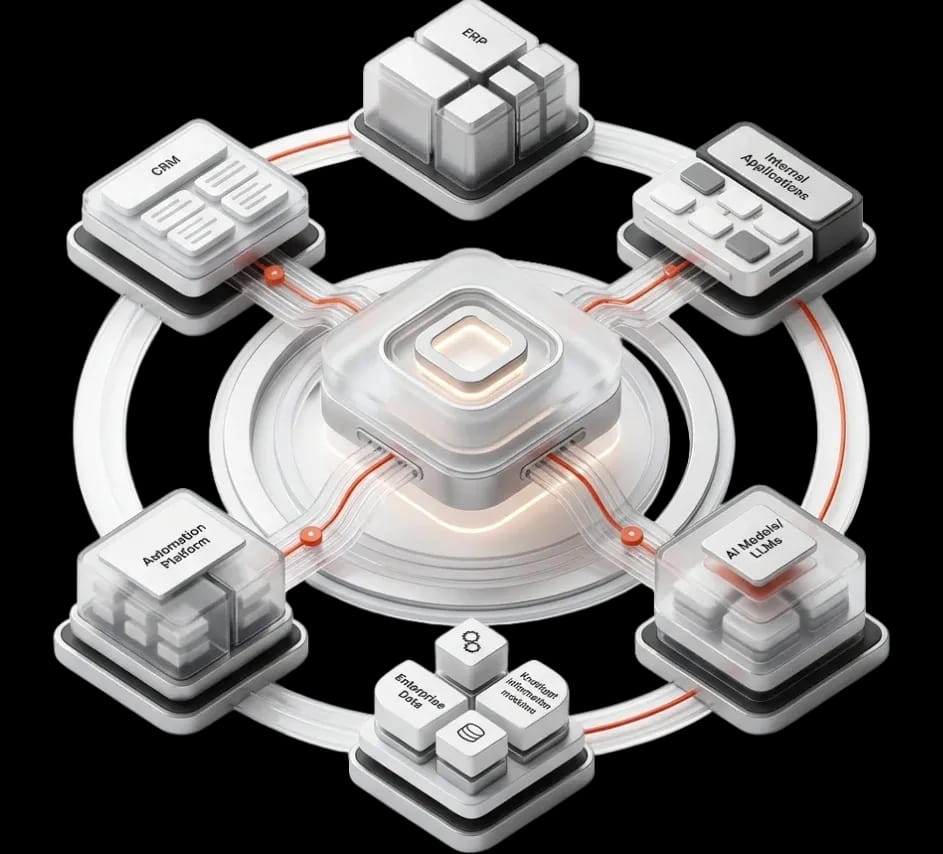
We’re a US-based AI-first AI integration company helping startups, scale-ups and enterprises connect LLMs, AI agents, generative AI and machine learning models directly into the applications, platforms and workflows their business already depends on. No rip-and-replace. No year-long transformation programme. Senior AI engineers who design integration architectures that are secure, observable and production-ready from the first deployment.
Years of Experience
Experts in Our Team
Happy Customers Worldwide
Projects Delivered Successfully


4.9/5 ratings

5/5 ratings

Whether you’re integrating your first LLM API into a customer-facing product, wiring AI agents into enterprise workflows, connecting generative AI to your proprietary knowledge base or embedding predictive models into the BI dashboards your teams already use, our AI integration services cover every layer of how production AI gets connected to real business systems. Delivered by senior AI engineers who’ve shipped AI integrations at scale across regulated industries, complex enterprise stacks and fast-moving product teams.

Integrating a large language model into an existing application is a different engineering discipline from building a new AI product from scratch. The authentication architecture, the latency profile, the token cost model, the fallback routing and the output validation layer all need to be engineered for the system you’re connecting into, not the demo environment. We integrate OpenAI GPT, Anthropic Claude, Google Gemini, Meta Llama, Mistral and AWS Bedrock models into web applications, mobile apps, enterprise platforms and custom software with the production discipline that turns a promising prototype into a feature users actually trust. Prompt versioning, semantic caching, streaming response handling, output validation and the cost monitoring that keeps your AI invoice predictable.

AI agents that can’t connect to your systems, your data and your workflows aren’t agents, they’re chatbots with ambition. We integrate AI agents into the operational fabric of your business: CRM platforms where agents qualify leads and draft follow-ups, ERP systems where agents monitor exceptions and trigger procurement workflows, communication platforms where agents handle tier-one support autonomously and internal tools where agents execute multi-step research and reporting tasks without constant human oversight. Tool integration, API orchestration, state management across agent steps, human-in-the-loop design for the tasks that need it and the observability layer that tells you what your agents are actually doing in production.

The richest business context your AI systems can access is already sitting in your CRM and ERP, locked behind data models your AI vendor’s demo never accounted for. We integrate AI capabilities directly into Salesforce, HubSpot, Microsoft Dynamics, SAP, NetSuite, Zoho and ERPNext using stable API architectures, careful field mapping and the change control discipline that keeps your existing workflows intact while AI makes them measurably smarter. Predictive lead scoring surfaced inside your CRM. Demand forecasting connected to your ERP’s inventory module. AI-generated summaries embedded in the deal and account records your sales team already lives in.

Retrieval-Augmented Generation is the pattern that makes LLMs useful over your proprietary data instead of generic internet knowledge. We design and build RAG pipelines that connect your knowledge base, your documentation, your product data and your operational content to the LLM layer cleanly: document ingestion and chunking strategy, embedding model selection, vector database deployment and management, hybrid search architecture, reranking for retrieval accuracy and the evaluation harness that measures whether your RAG system is actually returning the right content before it reaches users. Pinecone, Weaviate, Chroma, FAISS, pgvector and managed vector solutions across all three major cloud platforms.

AI systems are only as reliable as the data flowing into them. We design and build the data pipelines that keep your AI integrations fed with clean, timely and correctly structured inputs: data contracts that enforce schema consistency, validation layers that catch quality issues before they reach the model, ingestion pipelines from operational databases, data warehouses, SaaS platforms and streaming sources and the monitoring that alerts your team when data quality degrades before the model output does. Apache Kafka, Airflow, Spark, dbt and cloud-native pipeline tooling across AWS, Azure and GCP, matched to your existing data infrastructure.

Natural language processing, computer vision and document AI aren’t standalone products, they’re capabilities that generate value when they’re embedded directly into the applications and workflows where the work happens. We integrate NLP for text classification, entity extraction, sentiment analysis and semantic search into customer support platforms, content management systems and operational dashboards. We integrate computer vision for defect detection, quality control and visual inspection into manufacturing and logistics workflows. We integrate document AI for OCR, invoice processing, contract extraction and form automation into the back-office systems that still run on paper-based processes.

Predictive models that live in a data science notebook don’t change how your business operates. Predictive models surfaced inside the BI dashboards, CRM views and operational systems your teams already use every day do. We integrate forecasting models, churn prediction systems, demand planning engines and anomaly detection into Power BI, Tableau, Looker and custom analytics platforms so the AI insight is visible at the point of the business decision, not buried in a model output file your operations team never opens. End-to-end from feature pipeline to production model serving to the visualization layer your business users actually navigate.

Some AI decisions can’t wait for a round trip to the cloud. Defect detection on a production line, anomaly flagging on edge devices, real-time inference in field equipment and predictive maintenance on connected assets all need AI that runs at the edge, close to the data, with offline tolerance built in. We integrate compact ML models onto gateways, edge devices and embedded systems using TensorFlow Lite, ONNX Runtime and vendor-specific edge AI tooling, with MQTT and HTTPS sync back to central systems, over-the-air update capability and the ring buffer architecture that keeps your edge AI useful during network outages.

AWS Bedrock, Azure AI Studio, Google Vertex AI and SageMaker are powerful platforms that are also easy to over-engineer, over-provision and over-spend on without the right integration architecture. We integrate cloud AI platform capabilities into your existing applications and data infrastructure through consistent, abstracted interface layers that keep your workloads portable, your spend governed and your vendor optionality intact. Model selection across foundation model catalogs, inference endpoint management, cost monitoring wired into your FinOps practice and the multi-cloud AI architecture that doesn’t lock your product roadmap to a single platform’s release cycle.
Most integration shops treat AI as just another API to wire up. We treat it as a first-class engineering discipline with its own reliability patterns, cost models, observability requirements and failure modes. Every layer below reflects how we build AI integrations that are designed to survive production, not just pass UAT.
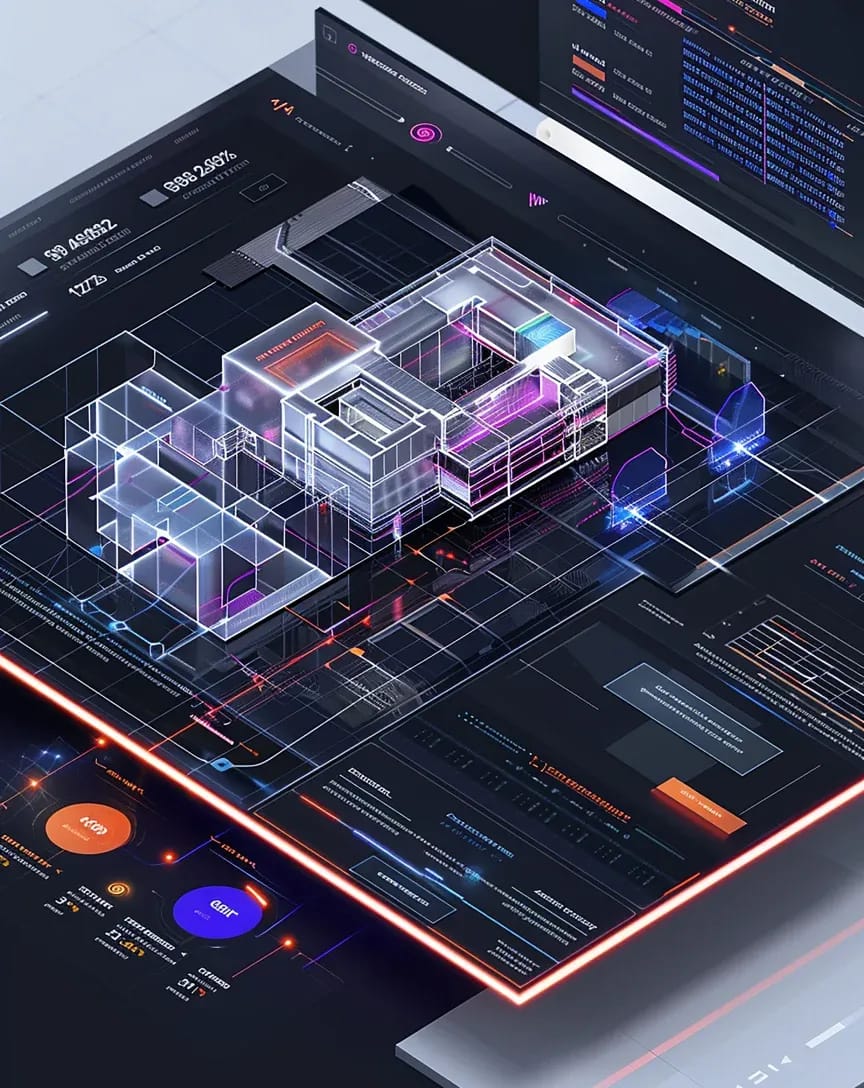
Idempotency, retry logic, circuit breakers, fallback model routing and the error handling patterns that keep downstream systems healthy when an AI API call fails, rate limits, returns an unexpected output or takes three times as long as the SLA allows.
Highlights:
Idempotency, retry logic, circuit breakers, fallback model routing and the error handling patterns that keep downstream systems healthy when an AI API call fails, rate limits, returns an unexpected output or takes three times as long as the SLA allows.
Highlights:
AI integration isn’t one category. It spans model APIs, enterprise platforms, data pipelines, edge devices, BI tools, communication systems and the long tail of proprietary systems that modern businesses actually run on. Here are the integration capabilities we deliver and the engineering bar we hold ourselves to on each one.

LLM API Integration & Management
Third-party LLM API integration across OpenAI, Anthropic, Google, Cohere, Mistral, AWS Bedrock and Azure OpenAI Service with abstraction layers that keep your application portable across model providers. Prompt versioning, response streaming, token budget enforcement, fallback routing across models, semantic caching and the API management discipline that keeps your LLM integration performing reliably as model providers update, deprecate and reprice their APIs.

Vector Database Integration
Pinecone, Weaviate, Chroma, FAISS, Milvus, pgvector and Qdrant integrated into your application and data infrastructure. Embedding pipeline design, index management, namespace architecture for multi-tenant isolation, metadata filtering, hybrid search combining vector and keyword retrieval, performance tuning for query latency and the operational practices that keep your vector database synchronized with the source content it’s supposed to represent.

AI Agent Tool & API Integration
Tool registration, API wrapping, authentication handling and the structured output contracts that let AI agents call your internal APIs, your third-party platforms and your data systems reliably. LangChain, LlamaIndex, CrewAI, AutoGen and custom agent frameworks integrated with the tool ecosystems your business actually runs on. MCP server design for standardized tool interfaces that work across agent frameworks without rebuilding the integration layer every time the framework changes.

Enterprise Platform AI Integration
Salesforce, HubSpot, Microsoft Dynamics, SAP, NetSuite, Zoho, ServiceNow, Workday and the enterprise platforms your organization has spent years and significant budget configuring. AI capabilities embedded through native APIs, webhook architectures, middleware layers and the custom connector engineering for platforms whose standard integration options weren’t designed with AI workloads in mind. Change control discipline that keeps your existing platform configurations stable while AI capabilities layer in incrementally.

Data Warehouse & Analytics AI Integration
Snowflake, Databricks, BigQuery, Redshift and Azure Synapse integrated with AI and ML model layers. Feature store design, model serving infrastructure connected to warehouse data, reverse ETL pipelines that push AI-generated insights back into operational systems and the Cortex AI, Databricks AI and BigQuery ML integrations that let your data warehouse serve as both the AI’s data source and its inference platform for the use cases where that architecture earns its keep.

Communication & Productivity Platform Integration
Slack, Microsoft Teams, email platforms, Twilio, WhatsApp Business API and the communication channels your teams and customers already use, connected to AI capabilities that make them more productive. AI-assisted message drafting, intelligent notification routing, meeting transcription and summarization, automated follow-up workflows and the integration architecture that keeps AI operating inside your communication platforms without requiring users to change where they work.

MLOps & Model Serving Integration
SageMaker, Azure ML, Vertex AI, MLflow, BentoML and custom model serving infrastructure integrated with your application layer through clean, versioned inference endpoints. Model registry integration, A/B testing infrastructure for model variants, shadow deployment patterns for safe rollout of new model versions, drift monitoring wired into your observability stack and the retraining pipeline integration that closes the feedback loop between production performance and model improvement.

Legacy System AI Integration
AI integration with legacy enterprise systems isn’t a solved problem and most AI vendors won’t touch it. We do. SOAP and REST API wrappers around legacy interfaces, database-level integration where APIs don’t exist, file-based integration patterns for systems that still move data through FTP and shared directories, ETL pipelines that transform legacy data formats into structures modern AI systems can consume and the patience and engineering discipline that legacy integration work actually requires.

We’re not just another AI integration company. We’re the AI-first engineering partner you bring in when the connector plumbing has to be production-grade, the existing systems have to keep running and the AI integration has to generate measurable outcomes, not just pass a demo.

Every AI integration we build is engineered for the failure modes that only surface under real load: rate limit handling, fallback routing, idempotency, output validation, cost overruns and the edge cases that kill integrations built against happy-path assumptions. We design for production from the first architecture session.

You work with AI engineers who’ve built RAG pipelines, shipped agentic workflows, managed LLM inference infrastructure and integrated AI into regulated enterprise environments. Not developers who completed an AI API tutorial last quarter and are learning production patterns on your project.

PII detection and redaction before data reaches external model APIs, secrets management, OAuth and API key rotation, audit logging for every AI call and the compliance architecture that keeps AI integrations inside your GDPR, HIPAA and SOC 2 posture. Security isn’t a review at the end of the integration, it’s a constraint at the start of the architecture.

Token-level cost monitoring, semantic caching, request batching, right-sized inference endpoints and the budget governance that keeps AI infrastructure costs predictable as usage scales. We’ve seen what unmonitored LLM API spend does to a cloud invoice. We build the controls that prevent it.

LLM APIs, vector databases, AI agents, RAG pipelines, data pipelines, MLOps infrastructure, enterprise platforms and edge AI, all under one engineering practice. You don’t need to coordinate between a model specialist, an integration shop and a data engineering team. We cover the full stack.

MCP servers for standardized agent tool interfaces, multimodal model integration, real-time RAG over streaming data, on-device AI for edge and mobile and the agentic integration patterns that are reshaping how enterprise software works. We architect for what’s coming, not just what worked in the last project.
Most AI integration projects don’t fail because the model was wrong. They fail because the integration architecture never accounted for the target system’s real data model, the security team’s actual requirements or the failure modes that only surface when real users start hitting the integration at real volume. Our AI-first AI integration services follow a structured delivery methodology designed to surface those problems before the integration is built, not after it breaks.
Here’s exactly how it works.

We map your existing system landscape, data flows, API inventory, security posture, compliance requirements and the business processes your AI integration needs to operate within. The output is an honest picture of what’s actually connectable and what the integration needs to account for.

We design the target integration architecture: model selection, data pipeline design, API abstraction layer, security controls, observability requirements, cost model and the failure mode analysis that shapes the resilience patterns before a line of code is written.

We prepare the data layer: ingestion pipelines from source systems, schema validation, PII detection and redaction, embedding pipelines for RAG use cases, vector database setup and the data quality checks that keep your AI integration fed with reliable inputs from day one.

We build the integrations in phased sprints with comprehensive testing at every layer: unit tests for integration logic, integration tests against sandbox and staging environments, load testing under realistic volume, security penetration testing and the end-to-end validation that covers the edge cases your UAT script won’t.

We deploy integrations with shadow mode testing where the use case warrants it, phased traffic rollout, monitoring and alerting stood up before production traffic hits and the rollback procedures that have actually been tested, not just written in a runbook that nobody’s read.

We operate the AI integration layer in production or support your in-house team in doing so: performance monitoring, cost optimization as usage scales, model version management as providers update their APIs, third-party API change tracking and the quarterly integration reviews that surface improvements before technical debt compounds.
Your AI integration engagement doesn’t fit a template, and the contract shouldn’t either. The right model depends on your integration scope, your timeline and your in-house engineering depth. Three models, all built for AI-era delivery speeds.
You’re running a multi-quarter AI integration programme, building out enterprise AI integration architecture at scale or augmenting your in-house team without the cost and lead time of full-time AI integration specialists.
Hand-picked AI engineers, ML specialists, data engineers and a delivery lead working only on your integration programme. Architecture decisions, sprint planning and production monitoring all run on your calendar and your tooling.
Monthly retainer. No surprise invoices, no scope-creep billing. Team composition flexes as your integration roadmap evolves.

3 to 10 engineers

6-month minimum

Scales with 30-day notice

Most teams start with a focused integration and scale the programme as production results validate the approach. Let’s figure out the right starting point together.

Building AI-First Integration Foundations for the Businesses That Will Define the Next Decade. The companies investing in production-grade AI integration now won’t be the ones explaining to their board why the AI initiative lives in a demo environment two years after the first proof of concept.

AI integration challenges look different across industries. The compliance posture, the data sensitivity, the system landscape and the risk tolerance for AI failures all change the engineering approach. These are the verticals where we’ve shipped AI integrations in production and know what real integration work looks like.

Honest answers to the questions every founder, CTO, head of engineering and head of product asks before they hire an AI integration company. If something isn’t covered here, our AI integration architects will walk you through it on a discovery call, no sales pitch, no fluff.
Look beyond the model logos on the website. The right AI integration company asks more questions than it answers in the first conversation: about your existing system architecture, your data model, your security and compliance requirements and what a broken AI integration would actually cost your business. Evaluate on production integration depth, not just AI familiarity. Anyone who quotes an AI integration before they’ve audited your system landscape and your data quality isn’t the right partner.
End-to-end AI integration services cover systems audit and integration architecture design, LLM and generative AI API integration, RAG pipeline and vector database build, AI agent and agentic workflow integration, ERP and CRM AI integration, data pipeline engineering for AI workloads, NLP and computer vision embedding, predictive analytics and BI integration, IoT and edge AI integration, security and compliance architecture and ongoing production operations and monitoring. The best engagements start with a systems audit before any integration work begins.
A focused AI integration project, a single LLM API integration or a RAG pipeline build: $15,000 to $60,000. A mid-complexity AI integration programme covering multiple systems, agentic workflows or enterprise platform integration: $75,000 to $300,000. An enterprise AI integration programme with ongoing operations: $300,000 to $1M+. Ongoing AI integration operations typically run $8,000 to $50,000 per month depending on integration count, traffic volume and model usage. We provide detailed estimates after a systems audit.
A focused AI integration, a single LLM API or RAG pipeline: 3 to 8 weeks. A mid-complexity AI integration covering multiple systems or an agentic workflow build: 8 to 20 weeks. An enterprise AI integration programme across multiple platforms and business units: 6 to 18 months, executed in phases. We provide milestone-based timelines in writing before integration work begins.
Yes, that’s the core proposition. AI integration adds intelligence to the systems your business already runs on without requiring you to replace, rebuild or migrate away from them. We use API integration, webhook architectures, middleware layers, database-level integration and custom connector engineering to embed AI capabilities into your existing technology stack. The goal is always to make your current systems measurably smarter, not to create a dependency on a new platform.
Retrieval-Augmented Generation is the architecture that makes LLMs useful over your proprietary data rather than just generic internet knowledge. Instead of fine-tuning a model on your data (expensive, slow to update and hard to audit), RAG retrieves the relevant content from your knowledge base at query time and provides it as context to the LLM. The result is an AI system that answers questions accurately from your actual documentation, your product data and your operational content, stays current as that content changes and can cite exactly which source it used for a given answer. For most enterprise AI integration use cases it’s the right architecture.
Security is designed into the integration architecture from day one. PII detection and redaction before data reaches any external model API, secrets management and API key rotation, OAuth 2.0 authentication for all integration endpoints, encryption in transit and at rest, audit logging for every AI API call and the data residency controls that keep your customer data inside the jurisdictions your compliance posture requires. For HIPAA and GDPR use cases we also design the Business Associate Agreement and Data Processing Agreement structures that the integration needs to operate legally.
Three models: Dedicated AI Integration Team (for multi-quarter integration programmes and enterprise AI integration at scale), Time and Material (for evolving scope and iterative integration work) and Fixed Cost (for well-scoped integration projects with defined deliverables). We recommend the model honestly based on your situation, not based on which generates the most billing.
Yes. AI agent integration is one of our core specialties. We integrate AI agents into Salesforce, HubSpot, Microsoft Dynamics, ServiceNow, Slack, Microsoft Teams and the operational platforms your teams already use, designing the tool integration layer, the authentication architecture, the state management across multi-step agent workflows and the human-in-the-loop controls for the tasks where full autonomy isn’t appropriate. The agent operates inside your existing platform, not as a parallel system your team has to remember to check.
AI integration costs are non-linear: a feature that costs a few hundred dollars a month in development can cost tens of thousands at production scale if the integration wasn’t built with cost governance in mind. We address this through semantic caching to eliminate redundant LLM API calls, request batching where the latency budget allows, right-sized inference endpoints that don’t over-provision GPU capacity, token budget controls per request type and the monitoring that surfaces cost anomalies before they compound into a quarterly problem.
Yes. Managed AI integration operations is one of our core offerings: 24/7 monitoring, performance tracking, cost optimization as usage grows, model version management as providers update their APIs, third-party API change tracking and quarterly integration reviews. AI integrations are not set-and-forget systems. The model landscape evolves, your data changes, usage patterns shift and the integration needs continuous attention to stay reliable and cost-effective. We provide that attention or transfer the practice to your in-house team with the documentation and training to operate it confidently.
Didn't Find What You Were Looking For?
Get In Touch With Our Experts


Curated insights, architecture guides and best practices on LLM integration, RAG pipeline design, AI agent integration, enterprise AI integration, AI FinOps and the integration patterns reshaping how modern businesses connect intelligence to the systems that run their operations.
We'd love to understand what you want to build. The more context you share, the faster we can give you a useful response not a sales pitch, but a genuine assessment of how we can help and what working together would look like.


Solvios is a leading software development company crafting innovative solutions for businesses. We Specialize in custom software, web & mobile app development, and digital marketing. Partner with us to transform your vision into reality and achieve digital success.