Headless CMS Development
Headless CMS architecture for modern web and product teams Contentful, Sanity, Strapi, Storyblok and custom-built CMS solutions engineered for performance, flexibility and developer experience.
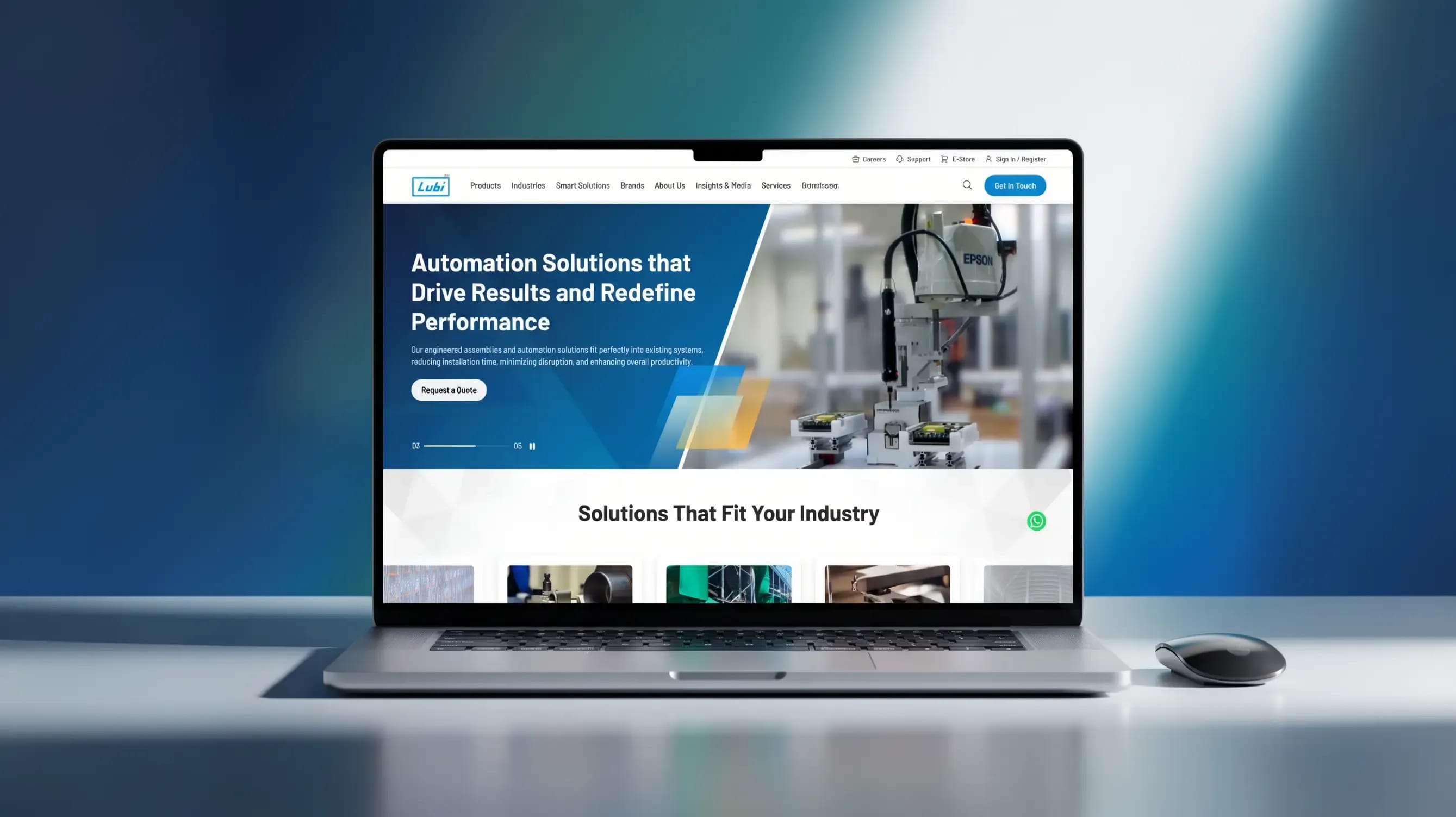
Learn MoreA leading distributor of industrial automation, solar, and electrical & control-panel equipment ran three separate businesses across three subdomains, a six-level product catalogue, and 6,000+ products that WordPress could no longer hold together. We rebuilt the entire digital foundation on a headless architecture — one unified platform with advanced UI/UX that carries all three businesses, dual product- and brand-led navigation, full e-commerce, a B2B quotation engine, an AI support assistant, and a content system the in-house team runs without touching a line of code.

Distributor of industrial automation, solar & electrical equipment
7 Months
Industrial Automation · Solar Energy · Electrical & Control Panel Equipment (B2B + B2C Distribution)
India
The client operates across three distinct businesses Automation, Solar, and Control Panel Equipment — each previously living on its own subdomain, stitched together by a main domain that did little more than route visitors elsewhere. The result was three disconnected WordPress sites, a fractured brand, and a product catalogue so deeply nested that WordPress was never built to manage it.
Three separate businesses split across three subdomains and a main “router” domain, with no unified brand or shared experience
The fix wasn’t a redesign it was a re-platform. We recommended consolidating all three businesses onto a single headless architecture: Umbraco managing content and catalogue on the back end, Next.js delivering a fast, SEO-ready experience on the front. That one decision unlocked everything else a navigable six-level taxonomy, cross-brand product discovery, online selling, a quotation workflow, and a content system the client’s team could finally operate alone.
One unified domain replacing three subdomains, with a single design system spanning all three businesses

The client’s catalogue isn’t a list of products it’s a deep, multi-brand structure serving two different kinds of buyer. Four problems had to be solved together, not one at a time.
Unifying Three Businesses Without Diluting Any of Them
Automation, Solar, and Control Panel Equipment each have their own audience, language, and product logic. Merging them into one platform meant designing a UI/UX that could carry all three with equal authority one coherent brand, three distinct businesses, no compromise on either side.
Two Mindsets, Two Ways to Navigate
Buyers didn’t think about the catalogue the same way. Some navigate by product drilling from a category through its sub-categories to compare a range of options. Others navigate by brand they trust a manufacturer and want to see everything that brand sells, then buy or request a quote. The platform couldn’t favour one over the other; it had to serve both intuitively, on top of a catalogue that already ran six levels deep from Master Category down to the individual Product.
Selling and Quoting in the Same Experience
The client’s buyers split between straightforward online purchases and high-value enquiries that need a formal quote. The platform had to do both a real e-commerce checkout and a Request-for-Quotation flow without forcing customers down the wrong path or duplicating the catalogue.
Migrating 6,000+ Products Without Breaking the Relationships
Six thousand products, multiple brands, inconsistent legacy data, and a six-level structure where every relationship matters. Getting it wrong would mean orphaned products, broken navigation, and missing images. It had to move in cleanly content, images, and category relationships intact in one controlled pass.
We started from the constraint that defined everything else: structure. A catalogue this deep and this varied couldn’t be bolted onto a tool that wasn’t built for it. So we rebuilt the foundation around a clean separation of concerns Umbraco owning content and catalogue, Next.js owning the experience and designed every feature on top of that to serve two goals at once: make it effortless for customers, and make it independent for the client’s team.
We chose Umbraco as the headless back end because it could model the client’s six-level taxonomy as structured, related content rather than flat pages. Content types were built around the real shape of the business master and super categories, product categories and sub-categories, series, and products so the catalogue’s depth became something to navigate, not something to fight.

Seven capabilities built to work as one system, not a feature checklist. Each addresses a specific part of the problem: unifying the brand, making a deep catalogue navigable from two directions, turning visitors into buyers and qualified enquiries, supporting them with an AI assistant, and handing the client's team full control without developer dependency.
Three businesses Automation, Solar, and Control Panel Equipment merged from three subdomains into one platform on a single domain, with one design system and UI/UX engineered to give each business equal presence. One brand, three businesses, no fragmentation.
Two complementary paths through the same catalogue. Product-led: drill from Master → Super → Product Category → Sub Category → Series → Product and compare similar items across brands in one view. Brand-led: start from a manufacturer and see everything it sells, then buy or request a quote. Whichever way a buyer thinks, the route feels native something the old WordPress site couldn’t do.
A predefined section library lets the admin team build CMS pages and assign them anywhere in the category or navigation hierarchy no developer involvement. Content, layout, and structure are now fully in the client’s hands.
The business went live as a single, unified brand on a platform built for the scale and complexity its catalogue actually demands.

We work with distributors and B2B businesses who have outgrown their current platform. Whether you're consolidating multiple sites, building dual navigation for different buyer types, or migrating a large catalogue that needs its relationships preserved, we'd like to hear about it. Response within 24 hours. No commitment required.
"You guys did a great job. Our directors love the website. The design, layout, and overall user experience align perfectly with our expectations and brand vision. We appreciate the team's dedication and the quality of work delivered throughout the project."
— Tejas, Digital Transformation Head & Head of Marketing, Industrial Distribution CompanyFrom the first brief to go-live, the project moved through five phases — each with a defined output signed off before the next began.
Brief sessions covering the three businesses, the full product taxonomy, the two buying journeys (purchase vs. quote), and content-management goals. The information architecture for the six-level hierarchy was mapped and signed off before design began.
Wireframes and high-fidelity designs for a unified multi-business experience, the cross-brand navigation model, the e-store, and the RFQ flow. Design system established typography, colour, spacing, and a reusable component/section library.
Headless built on Umbraco and Next.js: content modelling for the full hierarchy, the section-based page builder, e-commerce with per-product sell control, the RFQ engine, and OTP authentication.
Cleaning, structuring, and importing 6,000+ products through the custom pipeline, with verification of content, images, and hierarchy relationships. Cross-device and cross-browser QA, plus performance and SEO checks.

We consolidate onto a single domain with a clean URL structure and proper redirects from the old subdomains, so existing search equity carries over rather than being lost. A unified information architecture and SEO-ready metadata across every page make the merged site easier for search engines to crawl and rank than three fragmented ones ever were.
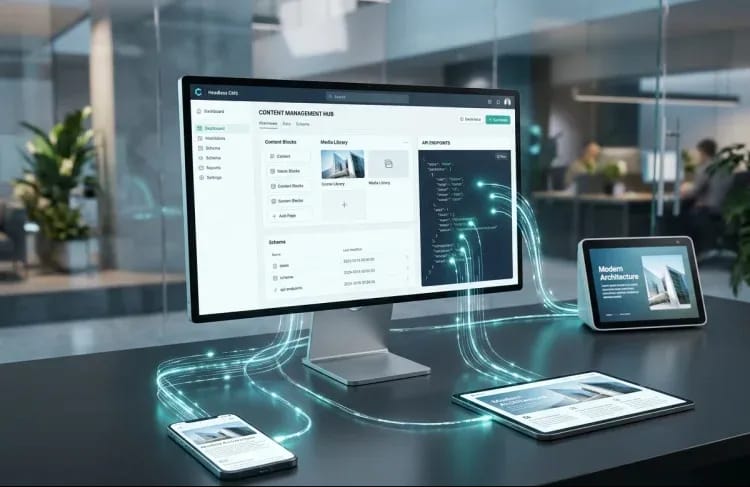
A headless CMS separates where content is managed from where it’s displayed — the CMS serves content via APIs to a separate front end. We chose Umbraco because it models deep, related structures well, letting us represent the client’s six-level taxonomy as structured data rather than flat pages and feed it to a fast Next.js front end.
Two halves working together: a custom mass-import function that loads data into the correct sections per the content schema, and a data engineer who cleans, segregates, and structures the source data to match. For the client’s 6,000+ products, that let us migrate in one controlled pass with images, content, and every hierarchy relationship intact.
Yes. The section-based page builder gives the admin team a library of predefined sections to assemble into pages and assign anywhere in the hierarchy, and the headless CMS lets them manage the full catalogue including whether each product is available to sell online without touching code.
Didn't Find What You Were Looking For?
Get In Touch With Our ExpertsWe'd love to understand what you want to build. The more context you share, the faster we can give you a useful response not a sales pitch, but a genuine assessment of how we can help and what working together would look like.
Buyers fell into two mindsets some navigate by product (category down to sub-category), others by brand (what does this manufacturer sell?) yet the old navigation could serve only one path, and never showed similar products across brands side by side
6,000+ products held as unstructured data across brands and categories, with inconsistent content, images, and relationships
Page and content changes dependent on developers the in-house team couldn’t build or reorganise pages on its own
No real e-commerce or B2B quotation capability for a business whose buyers expect both
A headless CMS (Umbraco) able to model the full six-level hierarchy as structured, related data
Dual navigation letting users browse by product category or by brand, whichever matches how they think
A Next.js front end for performance, clean URLs, and SEO built in from the first line of code
A section-based page builder so the admin team could assemble and assign pages without developer involvement
An e-commerce store with Razorpay checkout and per-product control over what sells online
A Request-for-Quotation engine for high-value B2B enquiries
An AI support assistant to answer visitor queries and guide them to the right products
A repeatable data-migration pipeline to move 6,000+ products in cleanly and accurately
Next.js drives the front end, delivering fast initial loads, clean URL structures, and SEO-ready metadata across thousands of pages. Decoupling the front end from the CMS meant the experience could be tuned for performance and search without being held back by the content layer behind it.
We gave the admin team a library of predefined sections they can assemble into pages no developer required. They build pages as they like and assign them anywhere in the category or navigation hierarchy, removing the developer dependency that had bottlenecked the old WordPress setup.
Research surfaced two distinct buyer mindsets, so we built two complementary ways through the same catalogue. Product-led navigation lets users drill from master category down to a specific product and compare similar items across multiple brands in one view. Brand-led navigation lets users start from a manufacturer they trust and see everything that brand sells, then buy or request a quote directly. Neither path is an afterthought both run on the same structured catalogue, so whichever way a visitor thinks, the route feels native.
The e-store lets customers buy products online directly, with payments handled through a Razorpay integration for secure, reliable checkout. Because not every product is meant for online sale, we gave admins a per-product toggle in the back office to control exactly what’s available to purchase the catalogue stays complete, while online selling stays curated.
For high-value enquiries, customers add products to an RFQ cart, adjust quantities, and submit a single request. The admin team prices it from the back office and sends it back turning scattered email enquiries into a structured, trackable quotation workflow.
Users sign in with a one-time password sent via SMS to their mobile number, so creating an account to purchase or request a quote takes seconds low-friction access that suits both first-time buyers and returning B2B customers.
An AI chatbot greets website visitors as a front-line agent: it answers questions, resolves common queries, and crucially for a catalogue this large guides users toward the right set of products for their need, whether they go on to buy online or request a quote. It gives every visitor an immediate, knowledgeable point of contact without waiting on a human.
Our backend developer built a mass-import function that loads pages and products into the right sections according to each content type’s schema. Our in-house data engineer cleaned, segregated, and structured all 6,000+ products to match so the migration ran in one controlled pass with content, images, and the relationships between every level intact.
A full e-commerce store where customers buy online via Razorpay, with a per-product back-office toggle controlling exactly what’s sellable. SMS-based OTP login lets users create an account and check out in seconds.
An RFQ cart where customers add products, adjust quantities, and submit a single enquiry. Admins price it from the back office and return it to the customer a structured replacement for ad-hoc email quoting.
A custom mass-import function paired with a fully cleaned, structured dataset moved 6,000+ products across brands and categories into the new schema in one controlled pass images, content, and all hierarchy relationships preserved.
An AI assistant that talks to visitors like a front-line agent answering questions, resolving queries, and guiding users to the right products for their need, whether they buy online or request a quote. Always-on support across a large, complex catalogue.
Go-live, final checks, and CMS training so the client team can build pages, manage the catalogue, and run the e-store and RFQ workflow independently. Documentation provided.