Giving Homegrown Sustainable Brands a Global Shelf to Sell From

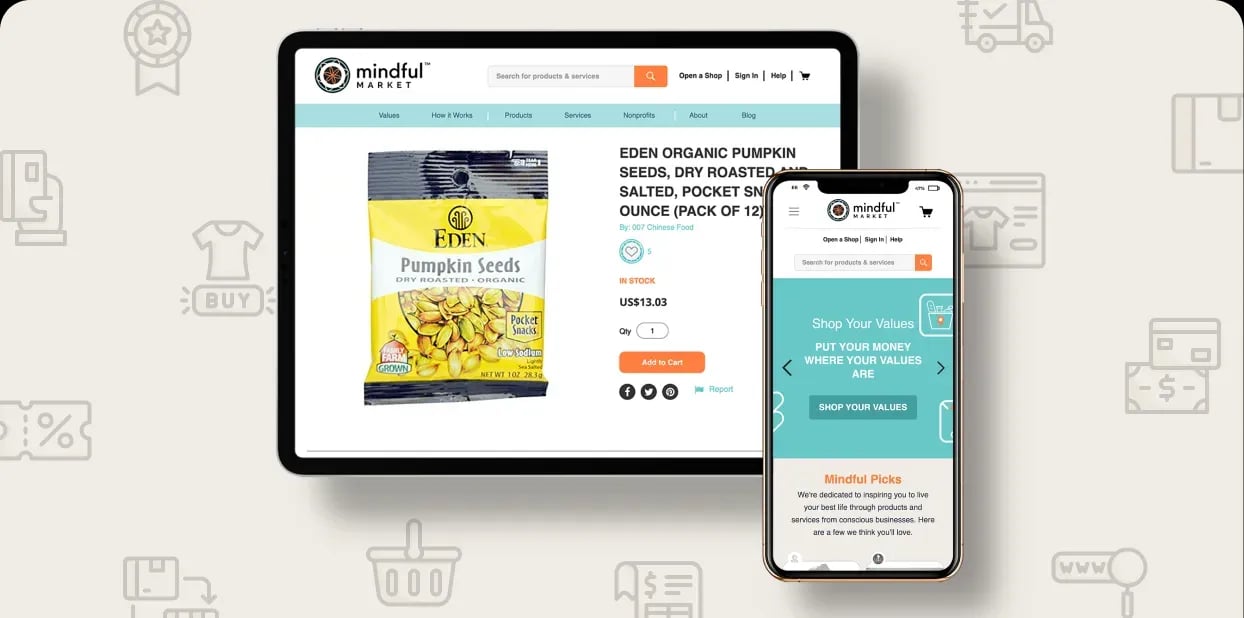
The client set out to build something most marketplaces don't bother with: a shopping destination built entirely around mindful consumption. Small, sustainable brands had good products and no real way to reach shoppers who cared about where those products came from. Existing marketplaces charged commissions steep enough to erase their margins, and buried them under sellers who didn't share their values. Solvios built the multi-vendor platform that gave these brands a home of their own.

Giving Homegrown Sustainable Brands a Global Shelf to Sell From
Client

A values-driven e-commerce marketplace connecting sustainable, homegrown brands with conscious shoppers

Duration

Ongoing engagement, active for 3+ years

Industry

E-Commerce

Country

The Challenge They Brought to the Table

The client wanted a marketplace built specifically for sustainable, ethical brands that struggled to reach buyers without giving up their margins to commission-heavy platforms. Solvios built a multi-vendor e-commerce marketplace with a full Salesforce CRM integration, giving vendors their own storefronts, order management and customer support tools. The result is a platform that has run continuously for over three years and connects homegrown sustainable brands with shoppers who care where their products come from.

Homegrown sustainable brands had no direct channel to reach global shoppers

Existing marketplaces charged commissions high enough to erase already-thin margins

Selling on generic platforms buried ethical products next to everything else

Vendors had no easy way to manage their own listings, pricing or promotions

Customer support was scattered with no case management or knowledge base

Updating shop details or products took longer than it should have

The Situation When Solvios Stepped In

When Solvios came on board, the client had a clear vision and no working platform behind it. What existed was closer to a concept than a marketplace. No vendor tools, no CRM, no way for a shopper to browse mission-driven brands in one place.

No multi-vendor storefront system existed for sustainable sellers to list their own products

No CRM in place to handle customer support, case tracking or a shared knowledge base

No centralized way for vendors to manage inventory, pricing or product variations

No payment infrastructure built for a marketplace with multiple sellers, not one storefront

No account structure separating vendor logins from customer logins

No SEO foundation in place to help conscious shoppers actually discover the platform

key challenges background

The Problem That Needed More Than a Quick Fix

This wasn't a case of bolting a plugin onto an existing store. The client needed a different kind of marketplace, one built around vendors who needed independence and shoppers who needed a reason to trust it. Four problems stood out early.

Reaching a Global Audience Without Losing the Margin

Homegrown sustainable brands had good products but limited reach. Selling through their own small storefronts capped them at a local audience, and joining a large generic marketplace meant handing over a cut of every sale big enough to make the business barely worth running.


Commission Structures That Punished Ethical Sellers

The commission models on existing marketplaces weren't built with small, values-driven sellers in mind. High fees on curated categories meant vendors either raised prices past what conscious shoppers would pay, or absorbed the loss themselves.


No Infrastructure for Vendor Independence

Every vendor needed to run their own shop inside the marketplace, with their own catalog, pricing and promotions. That level of independence isn't something you get out of a standard storefront template.


Slow, Manual Processes for Everyday Store Updates

Updating a product listing, adjusting a price or changing shop details took far longer than it should have. Vendors needed a system that let them make changes themselves, on their own time, without opening a support ticket.


How We Approached It?

The first call we made was about the platform itself. A multi-vendor marketplace needed to be built on something designed for exactly that job, not adapted from a single-store setup.

Built the Marketplace on a Multi-Vendor Foundation

Choose a multi-vendor commerce architecture as the base, giving each sustainable brand its own storefront within one marketplace rather than forcing every seller through a shared catalog.

Layered Salesforce CRM Into Customer Support

Integrated Salesforce CRM to bring case management, a ticketing system and a shared knowledge base into one place, so support requests from either vendors or shoppers had somewhere real to go.

Gave Vendors Real Store Management Tools

Built product and inventory management tools vendors could use themselves. Adding listings, editing details, updating prices and managing product variations without depending on the Solvios team for every change.

Engineered a PO-Based Order Management System

Designed order management around purchase orders so vendors could run their shop operations without needing enterprise-level ERP tooling they didn't have the budget or the need for.

Wired In Secure, Vendor-Aware Payments

Integrated a payment gateway built to route transactions correctly across multiple vendor accounts, not just one storefront, with the security layer a marketplace handling multiple sellers actually needs.

filter list background

What We Built & Delivered

The finished platform covers everything a sustainable-goods marketplace needs to run day to day, from the vendor side to the shopper side.

Store Management

Store Management

Vendors get full control over their own storefront. Visual editors, product and inventory tools, and the ability to add, edit and manage listings including descriptions, images, pricing and variations without waiting on support.

Salesforce Integration

Salesforce Integration

Salesforce CRM powers the support layer with case management, a ticketing system and a knowledge base that helps new vendors and shoppers get answers without a support queue backlog.

Vendor and Customer Account Management

Vendor and Customer Account Management

Separate account structures let customers create profiles, manage their details and track order history, while vendors get marketing tools like discount codes, promotional banners and cross-sell or upsell prompts.

Payment Gateway Integration

Payment Gateway Integration

A secure payment system supports cards, wallets and multiple payment methods, routing transactions between customers and the correct vendor accounts safely.

Multi-Vendor Order Management

Multi-Vendor Order Management

A PO-based order system gives each vendor visibility into their own orders and fulfillment without needing a full ERP setup to manage day-to-day operations.

SEO-Ready Marketplace Structure

SEO-Ready Marketplace Structure

The platform was built with SEO in mind from the storefront templates to the product pages, giving conscious shoppers a real path to discover the marketplace organically.

What Changed After We Started?

The marketplace didn't just launch. It's been running and growing for more than three years, and the numbers reflect that.

3+ Years - Continuous Operation

3+ Years - Continuous Operation

The marketplace has run without a platform rebuild for over three years, a sign the multi-vendor architecture held up as the business grew.

Global Reach - Beyond Local Markets

Global Reach - Beyond Local Markets

Homegrown sustainable brands that were previously limited to local sales now sell to shoppers well outside their original market.

Healthier Margins - Reduced Commission Pressure

Healthier Margins - Reduced Commission Pressure

Running their own storefront inside the marketplace instead of paying steep third-party commissions gave vendors room to keep their margins intact.

One Support System - Centralized, Not Scattered

One Support System - Centralized, Not Scattered

Salesforce CRM gave the client one place to manage vendor and customer support instead of requests spread across email and ad hoc channels.

Two Connected Communities - Vendors and Shoppers, Aligned

Two Connected Communities - Vendors and Shoppers, Aligned

The platform built a functioning community of shop owners and values-oriented shoppers around a shared idea: commerce that doesn't ignore its impact. None of this solves the original problem by accident. The client came to Solvios because sustainable brands needed a real channel to reach shoppers without losing their margins to commission-heavy marketplaces. Three years in, that's exactly what they have.

Building a Marketplace That Has to Work for Vendors and Shoppers at Once?

Multi-vendor platforms carry a different kind of complexity than a standard storefront. Store management, CRM, payments and order routing all have to work together from day one, not get patched in later. Response within 24 hours. No commitment required.

Talk to our team
Building a Marketplace That Has to Work for Vendors and Shoppers at Once?

I appreciate you and your team for all the support, development and solutions you provide. Thanks for being a great guy, for being dependable and for everything you do.

Jim, Founder, a sustainability-focused e-commerce marketplace

How the Engagement Ran

This wasn't a fixed-scope build with a single start and end date. It's been a running engagement since day one, and the phases below reflect how that work has actually been structured.

Discovery and Platform Selection
01

Discovery and Platform Selection

We mapped out the vendor and shopper requirements first, then made the call to build on a multi-vendor commerce architecture rather than force a single-store platform to do a job it wasn't designed for.

Core Marketplace Build
02

Core Marketplace Build

Our developers built the foundational marketplace: vendor storefronts, product management, order handling and the account structures separating customers from sellers.

Salesforce CRM Integration
03

Salesforce CRM Integration

Our Salesforce developers layered in case management, ticketing and a knowledge base so support had a real system behind it instead of an inbox.

Payment and Store Management Rollout
04

Payment and Store Management Rollout

We integrated the payment gateway and shipped the vendor-facing store management tools, discount codes and promotional features vendors needed to actually run their shops.

Ongoing Support and SEO
05

Ongoing Support and SEO

The engagement moved into continuous support, quality assurance and SEO work, an active, ongoing relationship rather than a one-time delivery.

Related Case Studies

filter list background

Frequently Asked Questions

Timelines depend on how many vendor-facing features the marketplace needs from day one. A core multi-vendor build with storefront management, order handling and basic CRM support typically takes 4 to 6 months. Adding a full CRM integration, payment gateway routing across multiple vendor accounts and SEO foundations extends that timeline further. This engagement launched with a phased approach: core marketplace first, CRM and payments next, then an ongoing phase of support and SEO work. Ongoing marketplaces rarely have a true finish line, since vendor tools, promotions and support systems tend to keep evolving as the seller base grows.

Standard single-store e-commerce platforms aren't built for independent vendors running their own storefronts inside one marketplace. A multi-vendor architecture handles that natively: separate vendor catalogs, individual store management and order routing per seller. A generic platform would need heavy custom development to fake what a multi-vendor platform already supports, which usually costs more in the long run and creates more maintenance debt. For a marketplace with dozens of sellers managing their own listings, a purpose-built multi-vendor model made more sense than retrofitting a single-store platform.

A marketplace has two support relationships to manage, vendor support and customer support, and they don't always need the same workflows. Salesforce CRM gives both a shared home through case management, a ticketing system and a knowledge base new users can self-serve from before ever opening a ticket. Without a CRM, marketplace support tends to scatter across email threads and ad hoc channels, which gets harder to manage as the vendor base grows. Integrating Salesforce early meant support scaled alongside the marketplace instead of becoming a bottleneck once more vendors joined the platform.

Multi-vendor payment routing is different from a standard checkout because a single transaction often needs to split correctly between the platform and the individual vendor's account. We integrated a payment gateway that supports multiple payment methods including cards and digital wallets, with routing logic built to send funds to the correct vendor account securely. Secure transaction handling was part of the integration from the start, not layered on afterward. The goal was a checkout that feels simple to the shopper while correctly settling funds behind the scenes across every vendor involved.

A marketplace doesn't stop needing engineering attention once it launches, especially one that's been running for years and adding vendors. Ongoing support usually covers quality assurance as new features ship, SEO work to keep the marketplace discoverable, and continuous refinement of vendor-facing tools like store management, discount codes and promotional features. For this engagement, that ongoing phase has included QA, Salesforce CRM support and SEO services delivered continuously rather than as a one-time project. Marketplaces that treat launch as the finish line tend to stagnate; the ones that keep evolving are the ones still running years later.

Didn't Find What You Were Looking For?

Get In Touch With Our Experts

Need Project Consultation? Let’s Talk

We'd love to understand what you want to build. The more context you share, the faster we can give you a useful response not a sales pitch, but a genuine assessment of how we can help and what working together would look like.