Modernizing a Biomedical Research Organization’s Website for Speed, SEO, and Scalability

The client is a biomedical research advocacy organization that educates the public about ethical animal research and its role in developing safe, effective medical treatments. Its Next.js website held years of credible content, but it had no content management system, so every update went through a developer, and the site was slow and hard to rank. We brought in Strapi as a headless CMS, redeveloped the site around it, and have spent more than a year since then improving its speed, SEO and AEO visibility.

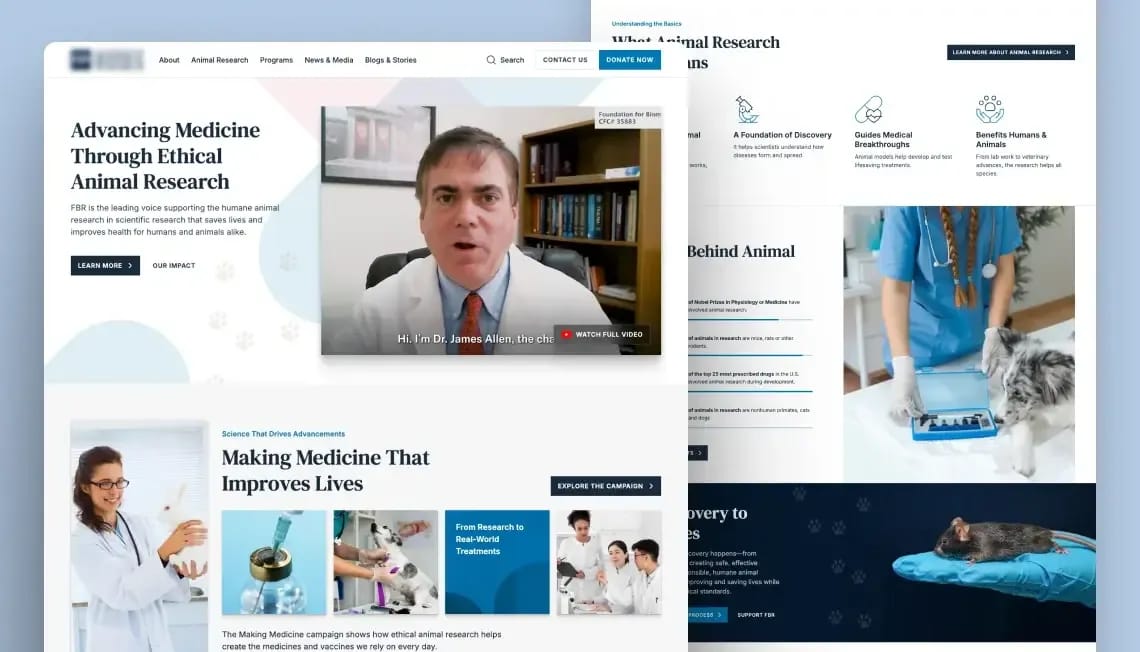
Website screenshots for a biomedical research foundation showing an ethical animal research homepage and a research process explainer page with a spokesperson video
Client

Biomedical research advocacy organization educating the public on ethical animal research

Duration

1 Year+ (ongoing engagement)

Industry

Healthcare / Biomedical Research

Country

United States

Tech Stack

The Challenge They Brought to the Table

The organization had a strong library of educational content on animal research, but its website wasn’t doing that content justice. The Next.js site had no CMS, so publishing meant waiting on a developer. Pages loaded slowly, the design felt dated for a scientific organization, and key resources sat outside the rankings where people were searching. They wanted a platform their own team could run, and one that performed and ranked better.

Slow page loads were hurting both search rankings and on-site engagement.

The visual design no longer matched what people expect from a trusted scientific organization.

With no CMS in place, every content update required a developer to change the code.

Important educational resources weren’t ranking because of technical and structural SEO barriers.

The site had no foundation for AEO, so answer engines weren’t picking up or citing its content.

Any redevelopment had to keep existing content and URLs intact to protect search equity.

The Situation When Solvios Stepped In

When Solvios came in, the organization’s website ran on Next.js with no content management layer behind it. Content lived directly in the codebase, performance hadn’t been tuned, and technical SEO had never been addressed at the architecture level. The editorial team couldn’t publish anything on their own.

Page content was written directly into the Next.js codebase instead of being managed through a CMS.

Editors had no dashboard, so even small text changes needed a developer and a new deployment.

Blog posts, resource libraries and educational pages had no structured content models behind them.

Page templates were inconsistent, which made the site harder to maintain and extend.

Gaps in metadata, site structure and internal linking limited how well search engines could crawl the site.

Performance had not been optimized, so pages loaded slowly, especially on mobile.

key challenges background

The Problem That Needed More Than a Quick Fix

Fixing the look alone wouldn’t have solved anything. The speed, SEO and publishing problems all traced back to how the site was built, with content locked in code and no performance or SEO groundwork underneath. The organization needed its site redeveloped around a proper content layer, with performance and search visibility designed in rather than patched on later.

Under-Optimized Site Performance

Pages were slow to load, and that cost the organization twice: visitors left before the content appeared, and Google treated the slow pages as weaker results. For an organization whose mission depends on people actually reading its material, performance wasn’t a technical nice-to-have. It was the gate in front of everything else.

A Design That Undercut Its Credibility

The organization speaks on a sensitive, science-heavy subject to students, educators, journalists and policymakers. A dated layout made well-researched content look less authoritative than it was. The redesign had to signal credibility at a glance without getting in the way of dense educational material.

No Content Management, Only Code Changes

Without a CMS, the editorial team couldn’t publish anything themselves. New articles, resource updates and even small text fixes had to go through a developer and a deployment. Complex content types like resource libraries and educational pages had no structure at all, which slowed how quickly the organization could respond to public conversation on its topic.

Search Visibility Held Back by Technical Barriers

The content itself was strong, but technical, structural and performance issues kept key resources from ranking. And as more people started asking AI tools and answer engines their questions, the site had nothing in place to be cited there either. Visibility had to be solved at the platform level.

How We Approached It?

The first call we made was architectural: keep the Next.js frontend, but move content out of the code and into a headless CMS. Adding Strapi behind Next.js let us fix the editorial workflow, performance and SEO together, then keep building on that base with ongoing SEO and AEO work.

Adding Strapi as a Headless CMS

We implemented Strapi as the headless CMS and designed structured content models for each content type, from blog posts and resource libraries to case studies and educational pages. For the first time, the organization’s team had a dashboard to publish and update content without touching code.

Redeveloping the Next.js Frontend Around Strapi

We redeveloped the existing Next.js frontend to pull content from Strapi through its API instead of hard-coded files. Along the way we moved pages to server-side rendering and static generation, so they reach the browser as complete HTML, with precise control over metadata, routing and image delivery.

Moving Existing Content Into Structured Models

We moved the content already living in the codebase into the new Strapi models and kept existing URLs in place, redirecting only where page structure changed. The goal was a redevelopment that kept the organization’s search equity instead of starting over on launch day.

Redesigning the Interface for a Scientific Audience

We redesigned the site around reading: clear typography, consistent templates for each content type and navigation organized around how visitors actually look for information. The design carries the organization’s credibility without competing with its content.

Building SEO and AEO Into the Platform

Technical SEO went into the architecture, not onto a post-launch checklist: semantic HTML, structured metadata, schema markup and a logical internal linking structure. Since launch we’ve kept working on SEO and AEO, structuring content so answer engines can extract and cite it as well as Google ranking it.

filter list background

What We Built & Delivered

What shipped is a fast, headless website the organization’s team can run on its own, and it has kept improving through more than a year of ongoing work. Here’s what’s in it.

Strapi Headless CMS With Structured Content Models

Strapi Headless CMS With Structured Content Models

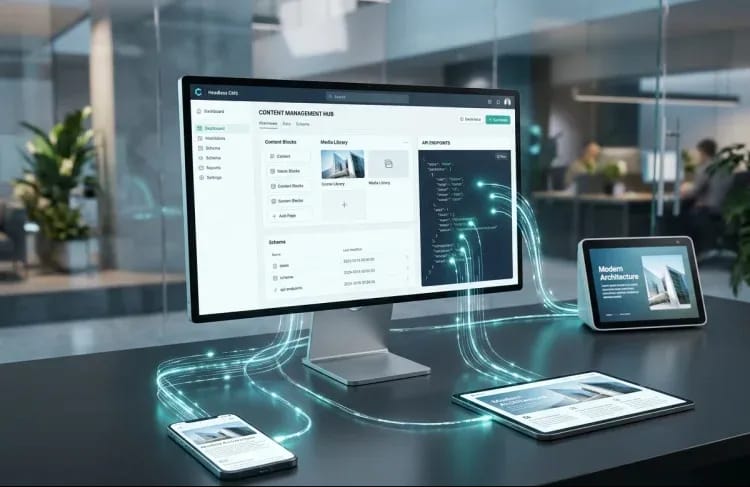
A clean, intuitive Strapi dashboard with structured models for blog posts, resource libraries, case studies and educational pages. Editors publish and update content without developer help, and entries are reused across the site through the API.

Next.js Frontend Connected to Strapi

Next.js Frontend Connected to Strapi

The existing Next.js frontend, redeveloped to render content from Strapi’s API using server-side rendering and static generation, so visitors and crawlers get complete pages quickly, including on mobile.

Content Moved Out of the Codebase

Content Moved Out of the Codebase

Existing pages and resources moved from hard-coded files into structured Strapi entries, with URLs preserved and redirects in place wherever page structure changed.

Redesigned, Mobile-Responsive Interface

Redesigned, Mobile-Responsive Interface

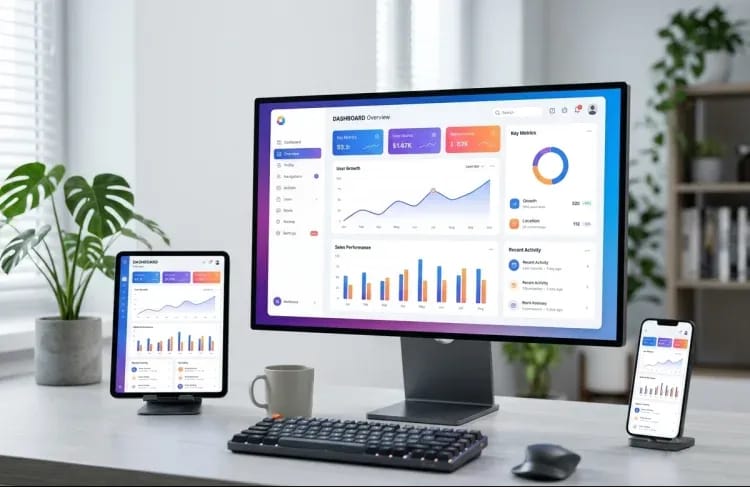
A modern visual design built around readability and trust, with consistent templates for each content type and a responsive layout tuned for phones, tablets and desktops.

Technical SEO Foundation

Technical SEO Foundation

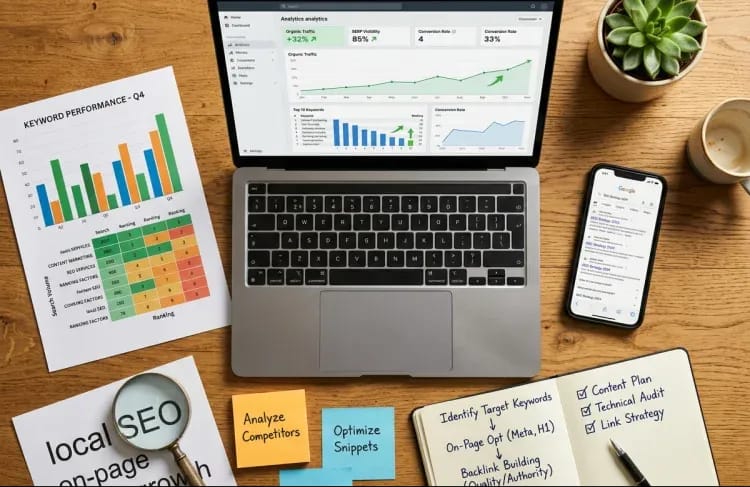
Semantic markup, page-level metadata, schema markup, an XML sitemap and a structured internal linking model, giving search engines a clear read of the site’s content and hierarchy.

Ongoing SEO and AEO Optimization

Ongoing SEO and AEO Optimization

Continuous post-launch work on search and answer engine visibility, including content structuring for AI citations and regular technical improvements, with the Solvios team available to walk staff through website features.

What Changed After We Shipped?

The organization didn’t just get a better-looking site. It got a platform that loads faster, publishes faster and is far more visible to the people searching for its content. Here’s what changed:

Faster Pages

Faster Pages

Server-side rendering, static generation and a tuned frontend mean pages now load quickly on both desktop and mobile.

Stronger SEO

Stronger SEO

With technical and structural barriers removed, key resources are far better positioned on Google, and the client reports considerable SEO gains over the past year.

AEO Visibility

AEO Visibility

Structured content and schema markup give AI-powered search tools clean material to cite, extending the organization’s reach beyond traditional search results.

Independent Publishing

Independent Publishing

The Strapi dashboard lets the team publish and update content on its own. Changes that once needed a code edit and a deployment now happen directly in the CMS.

Built to Scale

Built to Scale

Because content is delivered through an API, new content types, sections or channels can be added without rebuilding the site.

Is Your Website Holding Back Great Content?

If your organization has credible, valuable content sitting behind a slow or outdated website, the problem is usually the platform, not the writing. We can rebuild it for speed, search and answer engine visibility, then keep improving it after launch.

Response within 24 hours. No commitment required.

Start a Conversation
Is Your Website Holding Back Great Content?

For the last year, the organization I work for has been contracting with Solvios to improve our Strapi website. Solvios has helped us improve our SEO and AEO considerably within the last year, and they are good at making themselves available to explain website features. I highly recommend them.

— Client Representative, Biomedical Research Organization

How the Engagement Ran

This started with a redesign and a Strapi redevelopment of the existing Next.js site, then moved into SEO and AEO work that has continued for more than a year.

Discovery and Technical Audit
01

Discovery and Technical Audit

We audited the Next.js site’s performance, content and SEO issues, then mapped every content type the organization publishes to plan the Strapi content models.

Design and Content Modeling
02

Design and Content Modeling

We designed the new visual system and page templates, and built the Strapi content models for blog posts, resource libraries, case studies and educational pages.

Strapi Integration and Frontend Redevelopment
03

Strapi Integration and Frontend Redevelopment

We set up Strapi, redeveloped the Next.js frontend to pull content through its API and moved existing content out of the codebase into structured entries.

SEO Setup, QA and Launch
04

SEO Setup, QA and Launch

We implemented metadata, schema markup and sitemaps, tested performance and cross-device behavior, then launched and handed the Strapi dashboard to the editorial team. This is where the SEO work began.

Ongoing SEO and AEO Improvements
05

Ongoing SEO and AEO Improvements

The engagement continues, with the team refining technical SEO, structuring content for answer engines and supporting staff with website features.

Related Case Studies

filter list background

Frequently Asked Questions

A Next.js site without a CMS keeps content inside the codebase, so every update, even a typo fix, needs a developer and a deployment. Adding a headless CMS like Strapi moves content into a clean dashboard with structured content types, and the Next.js frontend pulls it through an API. The frontend stays fast and SEO-friendly, while editors get full control over publishing. It also means new content types or channels can be added later without rebuilding the site.

Next.js renders pages on the server or pre-builds them at deploy time, so visitors and search engine crawlers receive complete HTML instead of waiting for JavaScript to assemble the page. That improves load times and Core Web Vitals, and it gives crawlers content they can index right away. Next.js also gives developers direct control over metadata, routing and image optimization on every page. For a content-heavy site with a large educational library, that combination makes a real difference in how pages perform and rank.

Yes, as long as URLs and metadata are protected throughout. For this project we kept the existing Next.js frontend and its URL structure, moved content from the codebase into structured Strapi entries and redirected only the pages whose structure changed. Metadata was preserved or improved during the move. Handled this way, adding a CMS protects the search equity a site has already built, and the performance and SEO work that follows adds to it over time.

SEO focuses on ranking pages in traditional search results like Google. AEO, or Answer Engine Optimization, focuses on getting content selected and cited by answer engines such as Google’s AI Overviews, ChatGPT, Perplexity and voice assistants. In practice, AEO means writing clear, self-contained answers, using schema markup and organizing pages around the questions people actually ask. The two work together: SEO brings visitors in from search, and AEO puts an organization’s content in front of people who ask AI tools instead of searching.

Adding Strapi to an existing Next.js site, including content modeling, frontend redevelopment and moving content out of the codebase, usually takes a few months, depending on the size of the content library and the number of templates. This engagement didn’t stop there. It has run for more than a year, with SEO and AEO work starting once the Strapi redevelopment was in place, plus ongoing support for the organization’s team. Search visibility builds over time, so we recommend planning for post-launch optimization.

Didn't Find What You Were Looking For?

Get In Touch With Our Experts

Need Project Consultation? Let’s Talk

We'd love to understand what you want to build. The more context you share, the faster we can give you a useful response not a sales pitch, but a genuine assessment of how we can help and what working together would look like.