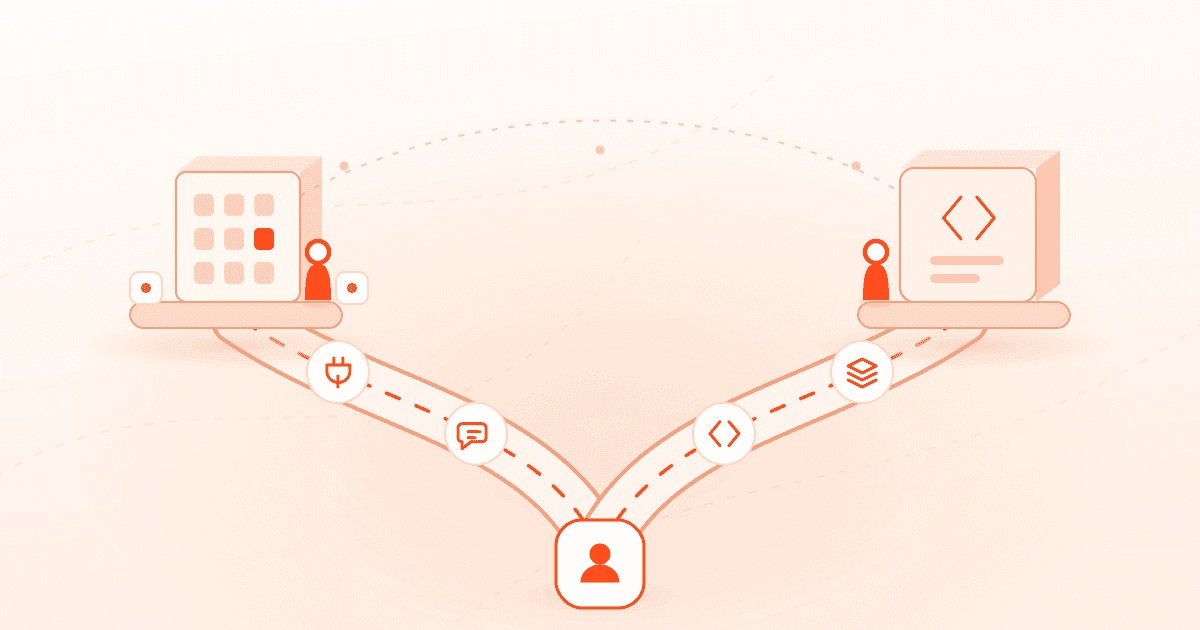
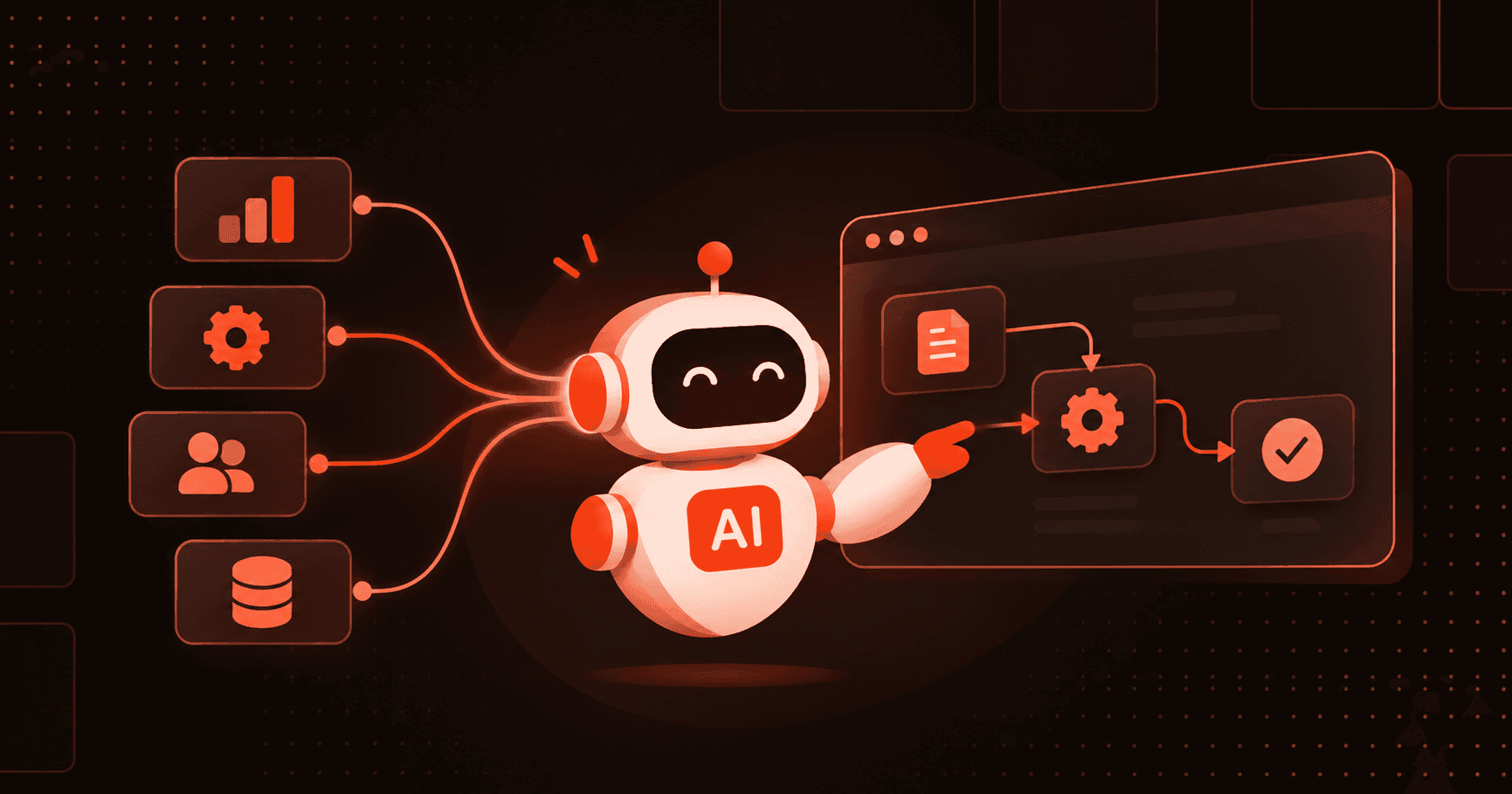
A software developer builds the product that everyone uses. A Forward Deployed Engineer works at the client's side and makes that product fit the client's setup.
Developers are judged on how good and reliable their code is. FDEs are judged on how quickly and smoothly the client starts getting value.
If you like focused coding and a steady routine, pick developer. If you like variety, talking to clients and seeing results fast, pick FDE. Both pay well, and you can switch between them later.
Overview
In 2026, the tech industry has two distinct engineering roles that often get confused: Forward Deployed Engineers and Dedicated Software Developers. Both write code and solve hard technical problems. But where they work, what success looks like, and where their careers lead are fundamentally different. This guide covers everything you need to know, from key differences to skills, career paths, and how AI is changing both roles.
Introduction
Enterprise software has a deployment problem in 2026.
Products are more complex than they were three years ago.
LLM integrations, agentic workflows, and AI-DLC implementations don't ship cleanly into client environments.
Go-live dates slip because nobody on the implementation side has the technical depth to fix problems in real time.
In response, today we have two engineering roles, namely:
Forward Deployed Engineers: Professionals working directly inside client environments, making complex software work in the real world.
Dedicated Software Developers: Professionals building the products those engineers deploy.
Getting them confused costs companies expensive mis-hires. It costs engineers years on a path that doesn't fit how they actually work best.
This blog takes a closer look at the differences between forward-deployed and dedicated software developers. Let’s get started.
What Is a Forward-Deployed Engineer?
The term ‘Forward-Deployed’ came from Palantir. Engineers were literally deployed on-site with enterprise clients: government agencies, large financial institutions, to build custom data pipelines and integrations inside environments nobody outside that client had ever seen.
The model spread because the problem it solved wasn't unique to Palantir. Complex software sold to enterprise clients consistently breaks down between the demo and go-live. Someone technical has to sit inside the client's environment and own the outcome, and that's where FDEs step in.
What an FDE typically works on:
Custom API integrations between client legacy systems and the core product.
ETL pipelines and data workflows built specifically for the client's environment.
Undocumented infrastructure that looks nothing like what was scoped in the SOW.
Translating technical blockers into language a VP can make a decision on in 20 minutes.
Feeding real friction points back to the internal product team.
Why the Role is Growing in 2026:
AI-native products require client-specific customization that standard implementation teams can't deliver.
Companies running FDE-augmented delivery consistently report time-to-value reductions of 30–50% compared with standard implementation models. The demand isn't slowing down.
What Is a Dedicated Software Developer?
A dedicated developer builds the product, and that’s their entire job description. They are part of engineering teams, they follow product roadmaps, and they write code so it can be used by thousands or, in some cases, millions of users at the same time.
Here’s what their day looks like: sprint planning, pull requests, code reviews, architecture discussions. External clients rarely enter the picture.
Typical responsibilities:
Development of clean, scalable, well-documented code for the entire product stack.
Design of APIs, databases, and system architecture.
Troubleshooting and performance tuning for applications.
Participating in code reviews and maintaining engineering standards.
Collaborating with product and QA teams to plan and ship features.
Dedicated Developer Vs. Dedicated Development Team:
A dedicated developer is an individual contributor embedded in an engineering team.
Whereas, a dedicated development team is an entire outsourced unit (developers, QA, designers) hired to build a product or feature set on behalf of a client. The former is a role; the latter is a staffing model.
Key Differences: FDE vs Dedicated Software Developer
Dimension
Forward Deployed Engineer
Dedicated Software Developer
Primary objective
Solve one client's problem, now
Build features that scale across all users
Customer interaction
Daily - executives, IT, end users
Rare to none
Project ownership
Client deployment outcome
Individual features or modules
Technical scope
Broad: integrations, APIs, data, infra
Deep: specialized in product stack
Development approach
Rapid prototyping, custom solutions
Structured sprints, maintainable code
Deployment responsibility
Per-client, production-ready integration
Core product releases
Work environment
Client site, dynamic, unpredictable
Internal teams, structured
Success metrics
TTV, go-live speed, client adoption
Feature delivery, uptime, code quality
The single most important distinction:
FDEs optimize for speed and fit.
Dedicated developers optimize for scale and maintainability.
Neither approach is superior; they exist because different problems require fundamentally different ways of working.
Skills Required for a Forward Deployed Engineer
FDEs are technical generalists who specialize in adapting to different workflows based on client environments. They offer skills like:
a. Software Engineering Fundamentals
Python dominates FDE work; fast to prototype, powerful for data manipulation, readable enough for clients to follow. SQL and Bash are daily tools. At senior levels, at least one compiled language is expected.
b. APIs, Integrations and Databases
The core of the job. REST and GraphQL fluency is non-negotiable. Most FDE engagements involve connecting systems that were never designed to talk to each other, which means deep SQL and NoSQL knowledge for building ETL pipelines in environments nobody fully documented.
c. Cloud and DevOps
FDEs deploy into client infrastructure: AWS, GCP, Azure, whatever the client runs. Docker and Kubernetes familiarity is expected. The goal isn't to manage infrastructure. It's to work confidently inside whatever the client has without needing a week of onboarding.
d. AI and LLM Knowledge
In 2026, this is baseline, not a bonus. Most enterprise FDE roles involve LLM API integration, agentic workflow implementation, or AI-DLC framework deployment. Engineers who can't work at this layer are increasingly screened out of senior FDE roles.
e. Problem-Solving Under Ambiguity
Client environments surprise people. Undocumented APIs. Custom middleware nobody remembers building. Database schemas that make no logical sense. FDEs solve problems without a full picture of the environment, and they do it fast, because go-live dates don't move.
Skills Required for a Dedicated Software Developer
Dedicated developers go deep where FDEs go wide. Specialization, clean architecture, and long-term maintainability define the role. They offer:
a. Programming Languages and Frameworks
Deep knowledge of one or two languages such as Java, Python, Go, TypeScript, and the ecosystem around them. The senior devs are not generalists; they're specialists who've gone further than most in a specific stack.
b. Software Architecture
That's the difference between mid-level and senior. Microservices, caching strategies, load balancing, database sharding. Architectural decisions made by dedicated developers may affect teams for years to come. Getting this wrong is expensive.
c. Database and API Development
APIs that survive traffic spikes. Schemas that don't fall apart under real load. Queries that run efficiently at billions of executions. This is core dedicated developer territory, not glamorous, but where production systems succeed or fail.
d. Testing and Debugging
Unit tests, integration tests, end-to-end testing frameworks. Debugging distributed systems; tracing latency, memory leaks, race conditions that only appear under load. This is unglamorous work that determines whether products are reliable.
e. Git, CI/CD and Cloud
Table stakes at every level. Version control, deployment pipelines, cloud infrastructure fluency; these aren't differentiators anymore; they're prerequisites.
Skill Comparison Table
Skill Area
Forward Deployed Engineer
Dedicated Software Developer
Technical depth
Broad across multiple domains
Deep in core product stack
Technical breadth
High: Adapts across environments
Moderate: Focused on product stack
AI and automation
High: LLMs, agentic AI, AI-DLC
Growing: Tooling and code assistants
Customer communication
Critical
Minimal
System integration
Core function
Occasional
Problem-solving
Ambiguous, real-time, client-driven
Defined, structured, roadmap-driven
Product ownership
Low: Client deployment focus
High: Feature ownership
Adaptability
Extremely high
Moderate
Which Role Is Right for You?
Go FDE if:
Ambiguous problems with no clear playbook sound interesting rather than frustrating.
You want to see the direct impact of your code on a real client's operations.
Variety across environments, tech stacks, and challenges sounds energizing rather than exhausting.
AI deployment, LLM integrations, and agentic workflows are where you want to build expertise fast.
Go dedicated development if:
Deep specialization in a language or domain is where you do your best work.
Building something incrementally (shipping, measuring, iterating) is the kind of work that holds your attention.
Structured environments with clear ownership and predictable sprint cycles suit how you operate.
Engineering without client-facing pressure is a feature, not a limitation.
Neither path is objectively better. The right choice depends entirely on what kind of work energizes you.
Career Path and Growth in 2026
Forward Deployed Engineer
FDE → Senior FDE → Lead FDE / Solutions Architect → Engineering or Product Leadership
The FDE track builds something most pure engineering paths don't: technical depth combined with genuine business acumen from direct client exposure.
Former FDEs end up in product management, enterprise solutions architecture, technical entrepreneurship, and increasingly in venture capital, because they've seen firsthand where enterprise software breaks and why.
AI's impact on FDE careers:
AI-DLC frameworks are now standard across enterprise deployments. FDEs with LLM integration experience and agentic workflow knowledge are commanding significantly higher compensation than those without.
The role is shifting from integration specialist to AI deployment architect, and the gap between those two titles is widening fast.
It's more structured and predictable, and it's a good option for engineers who want depth and a high salary.
Serious companies pay very well for Staff and Principal engineer tracks that don't require a move into management. With AI-assisted coding tools, baseline productivity expectations are rising. Engineers who adapt are moving faster; those who don’t face increasing pressure to produce without corresponding support.
AI's impact:
AI-assisted coding tools are raising baseline productivity for dedicated developers. As engineers adapt and leverage AI tools to write, review, and test code, they can ramp up faster.
Can a Software Developer Become a Forward Deployed Engineer?
Yes, and it happens regularly in enterprise tech.
What transfers immediately:
Programming fundamentals: FDEs write real code; this carries directly.
API and database knowledge: The most practically useful skills in client environments from day one.
Debugging instincts: The approach transfers even when the environment looks nothing like what you're used to.
What needs deliberate development:
Client communication: The hardest gap to close, and the most important.
Breadth over depth: Being effective across stacks rather than expert in one.
Business context: Understanding what the client actually needs, not just what they asked for.
AI and LLM integration: Non-negotiable for FDE roles at AI-native companies in 2026.
How to make the transition:
Step I - Take on cross-functional internal projects, work alongside sales, CS, or implementation teams.
Step II - Volunteer for client-facing technical support or integration work before formally switching roles.
Step III - Build side projects across multiple API integrations and unfamiliar systems.
Step IV - Learn LLM APIs and agentic workflow patterns; this is where FDE hiring is growing fastest.
Step V - Target AI-native SaaS, enterprise software firms, and consulting organizations where FDE functions exist.
The mindset shift matters more than the skill gap. Accepting that a working solution by go-live beats an elegant solution eventually is the hardest part of the transition for most developers.
Final Verdict: FDE or Dedicated Developer?
Neither role is universally better; the right selection depends on what you’re looking for.
FDE is the right path if you want to be the person who makes software actually work inside a specific client's messy, undocumented, real-world environment, and you can communicate that work clearly to people who don't write code. The compensation is strong, and AI-DLC and agentic AI exposure is accelerating. Career optionality after FDE is genuinely broad.
Dedicated software development is the right path if you want to build systems that scale, go deep on architecture and performance, and have clear, long-term ownership of a product. Equally rewarding, differently structured.
The question isn't which role has better prospects. It's which kind of problem you still want to be solving three years from now because that's where the answer actually lives.
How Solvios Can Help
Building a forward-deployed engineering function, scaling a dedicated development team, or implementing AI-DLC frameworks across enterprise clients - the architecture underneath the decision matters.
Solvios helps technology organizations design, staff, and scale the right development model for their stage. We build for real-world constraints, not ideal conditions.
Ready to build the right team for your next deployment? Book a free consultation with Solvios today.
Frequently Asked Questions
A senior technical specialist embedded inside a client's environment to deploy, integrate, and customize complex software. FDEs write production code and own client deployment outcomes, not internal product features.
Yes, but working in client environments rather than internal product teams. Same engineering fundamentals, completely different context, priorities, and definition of done.
A software engineer ships features for every user. An FDE makes the product work for one specific client, navigating their legacy systems, messy data, and real-world constraints that a product backlog was never designed to solve.
Strong programming fundamentals, REST/GraphQL API fluency, cloud and DevOps familiarity, AI and LLM integration knowledge, and the ability to communicate technical constraints clearly to non-technical decision-makers. AI-DLC framework experience is increasingly expected at senior levels.
Yes. Technical skills transfer well. The harder shift is developing client communication skills and accepting that speed and fit matter more than elegance. Start by seeking out client-adjacent or cross-functional work before making the formal move.
Like What You See? Share with a Friend
About Author
Jigesh Shah
Founder & CEO of Solvios Technology
Jigesh Shah is a visionary technology leader dedicated to driving innovation and transforming digital experiences. With a strong passion for solving complex challenges and a commitment to excellence, he has led Solvios Technology in delivering advanced solutions that empower businesses to grow and scale. His strategic mindset, customer-first approach, and deep expertise in emerging technologies continue to inspire teams and drive remarkable outcomes.
We'd love to understand what you want to build. The more context you share, the faster we can give you a useful response not a sales pitch, but a genuine assessment of how we can help and what working together would look like.
Join our community and get updates, insights, and ideas delivered right to your inbox. Stay connected!
We respect your privacy. Unsubscribe anytime.
Solvios is a leading software development company crafting innovative solutions for businesses. We Specialize in custom software, web & mobile app development, and digital marketing. Partner with us to transform your vision into reality and achieve digital success.

 Startups
 Fintech
 Healthcare
 Manufacturing
 Marketplaces
 Mortgage
 Real Estate
 Retail
 Sports and Fitness
 Telecom and IT
 Logistic
 SaaS Product
 About Us
 Blog
Blog Careers
 Become A Partner
 Contact


 About Us
 Blog
Blog Careers
 Become A Partner
 Contact