How AI Integration Works: Process, Cost & Benefits Explained
TechnologySeptember 28, 202610 min readby Jigesh Shah
Key Takeaways
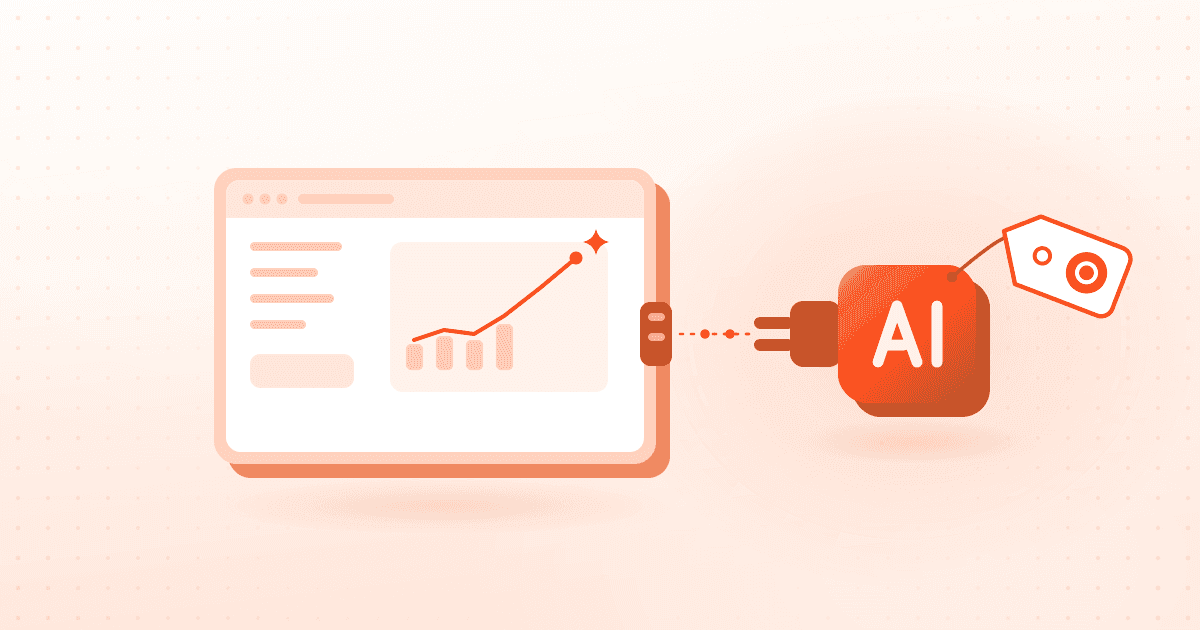
AI integration means connecting an existing model such as OpenAI, Claude, or Gemini to your app or workflow. It is not the same as building or training a model from scratch.
The work runs across eight steps: use-case discovery, data and infrastructure audit, architecture choice, integration mapping, building connections and pipelines, testing, phased go-live, and ongoing monitoring.
Cost ranges from $5,000 to $20,000 for a single-system API integration up to $150,000 or more for an enterprise-grade, compliance-ready build. The three biggest drivers are the number of connected systems, data readiness, and compliance requirements.
The payoff shows up as automation savings, faster decision-making, 24/7 support coverage, personalization at scale, and lower operating cost, usually within a quarter to a year.
Most businesses are already using AI in their day-to-day activities. An AI model already runs in most enterprise systems. So, the next AI move isn’t building an AI model from scratch, but integrating your existing AI model into your business workflow or service delivery pipeline. Such integration needs a few weeks and a well-defined budget.
Let’s explain the dynamics of AI integration, processes, costs, and benefits in detail.
Quick Answer
How does AI integration work?
AI integration connects an existing AI model to your business app or workflow, covering discovery, data and systems audit, model choice, core development, testing, and deployment in a production environment. An AI integration project costs $5,000 to $100,000 or more depending on the scope and complexity. AI integration boosts efficiency, speeds up decision-making, and improves customer experience within a quarter to a year.
AI Integration at a Glance
Type of Integration
Cost Range
Timeline
Value Propositions
Basic API integration
$5,000 to $20,000
2 to 4 weeks
Quickly automating a single workflow
Workflow integration with medium complexity
$20,000 to $60,000
6 to 10 weeks
Multi-system automation with data-driven insights
Robust integration across multiple systems
$60,000 to $150,000+
3 to 6 months
Gaining process efficiency across the organization
Enterprise-grade integration with compliance layers
$150,000 plus
4 to 9 months
Industry-level automation for strict adherence to compliance
What Does "AI Integration" Actually Mean?
Through AI integration, you can connect an existing AI model or service like OpenAI, Claude, Gemini, or a custom machine learning model, with your enterprise app or workflow. An AI integration project doesn’t involve building an AI model from scratch. Dedicated AI integration services help you establish the right connection through data pipelines, authentication, error handling, and context awareness. To integrate AI into an app or to add AI capability to your workflow, you need experience connecting AI models, not data science experts.
How AI Integration Works: Explaining the Step-by-Step Process
From the moment you said, "We should probably use AI here" to the moment an AI-integrated workflow starts operating in full swing, there are a total of 8 steps. Let’s explore them.
1. Use-case discovery & scoping
First, you should define the AI integration goal in specific terms. The objective isn’t just adding AI to CRM but pacing lead-scoring time by 10 hours a week. With a hyper-specific use case, evaluating the integration results and improving it becomes easier. Involve both technical leads and business stakeholders in the discovery process.
2. Data & infrastructure audit
The real difficulty of an AI integration project starts here. A brownfield integration connecting an AI model to messy legacy system and database involves more challenges than integrating the AI model from the very beginning to a system. The latter, a greenfield integration project, doesn’t involve a rigorous data and system audit. A brownfield system audit, on the other hand, requires checking data readiness, undocumented business logic, and how the data is spread across systems. AI-enabled Development Life Cycle (AI-DLC) has emerged as a fully equipped methodology for both brownfield and greenfield integration projects.
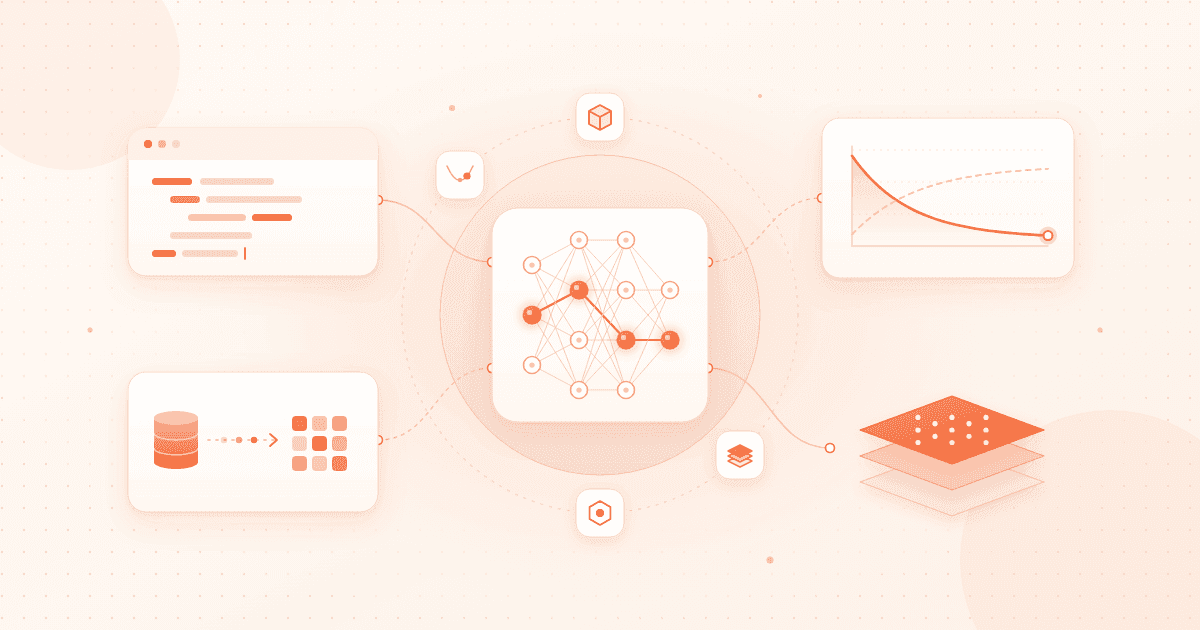
You decide the AI architecture based on the use case. For example, for simple tasks, an out-of-the-box API call to a flagship model is enough. Whenever accurate knowledge support is your priority, a RAG architecture that retrieves data from your own documents is ideal. For well-scoped tasks, fine-tuning the model behavior is often the right approach. You only need a custom model when all out-of-the-box and regular adjustments don’t work.
4. Architecture & integration mapping
Designing the data flow between the existing systems and the AI model is the next step. You need to designate a system as the source of truth for the AI output to document any API call failure, so it can map the next steps. In this step, the team needs to decide whether to opt for API-based integration, create a middleware layer, or build a fully custom module. Each option has its pros and cons in speed, control, and maintenance overhead.
5. Building connections & pipelines
Now it’s time to get to the actual development tasks like building API connections and data pipelines, and implementing access control and authentication. Connections and data pipelines provide the AI model with the right context. Access control measures avoid security risks by restricting access to what the model needs. This is the longest and most arduous step involving multiple layers.
6. Testing & evaluation
Testing integrations against edge cases and failure scenarios is crucial. Tests are not created to show a demo succeeding in an ideal scenario. At this step, QA and development teams also evaluate the accuracy of the AI model output against actual business data.
7. Going live
Now a phased deployment is carried out. It either starts with a pilot integration or a single workflow. Every integration phase should have a clear rollback path if it breaks or behaves unexpectedly in a real-world environment. Rolling out the integration in phases helps improve and fine-tune integrations based on actual usage data before they meet the volume and variety of the entire production environment.
8. Monitoring & support
AI integrations frequently need improvements and fine-tuning. Low accuracy, response failures, and higher cost footprint are common for many AI integrations. As business data and systems keep changing, such drift is likely to follow. To tune the integration to system changes, consider hiring a forward-deployed engineer, versed in the full delivery cycle, from integration planning to deployment to ongoing support.
How Much Does AI Integration Cost?
Integration Type
Cost Range (USD)
Timeline
Single model API integration with one system
$5,000 to $20,000
2 to 4 weeks
Multiple system integration with medium complexity & custom logic
$20,000 to $60,000
6 to 10 weeks
Enterprise AI integration with legacy systems with compliance requirements
$60,000 to $150,000 plus
3 to 6 months
Key Cost Drivers for AI Integration
The three biggest cost drivers are number of integrations, data readiness, and compliance complexity. Besides the initial build cost, you should also consider ongoing costs covering maintenance and upkeep. Let’s explore these cost drivers and ongoing cost component.
Number of integrations & systems
Each additional connected system typically adds $3,000 to $10,000 plus to the build cost. Moreover, a project scoped for a single integration can discover more integration needs following a thorough system audit.
Data readiness
Data readiness is the second biggest cost driver. Messy, unstructured, or inconsistent data requires data cleaning, chunking, and proper indexing for a RAG-based AI system to work. Database preparation adds significantly to the build cost.
Compliance requirements
Industry-specific compliance requirements such as HIPAA, SOC 2, GDPR, and CCPA add to the build cost. Compliance requirements are managed through audit logging, access controls, and review processes, involving additional expenses.
Ongoing costs
For an integration running for years, the initial build cost is much smaller than the ongoing costs for maintenance, monitoring, API usage, and general upkeep. A well-researched integration with phased deployment and continuous improvement cycles reduces ongoing costs.
Are you considering conversational AI integration rather than integrating an AI-engineered workflow? If yes, read this guide on AI Chatbot development cost.
Key Benefits of AI Integration
A well-planned AI integration offers multiple benefits. Most enterprises experience a steady spike in ROI following AI integration. Let’s briefly explore these benefits.
Efficiency through automation: Through AI integration, an enterprise can automate repetitive, rules-based tasks and save hundreds of manual labor hours.
Faster & informed decision-making: Data pattern and trend analysis across large datasets ensures informed decision-making that used to require weeks of data analytics work.
Round-the-clock customer support: With an integrated AI chatbot, you can keep your business engaged with customer queries 24/7 and across time zones.
Personalized experience at scale: Integrated AI models help businesses tune responses to individual customer queries, making them more culture-specific and context-driven.
Cost reduction over time: A business saves costs by automating manual repetitive tasks. AI-powered fault detection and predictive maintenance reduce system failures and save costs.
Competitive advantage: Through AI integration, businesses can turn the compound benefits of efficiency, cost savings, workflow automation, and improved customer support into competitive advantage.
AI Integration in Key Industries
Though AI adoption is speeding up across domains, some industries are better positioned to embrace AI in their workflows. Let’s take a look at the current state of AI integration across Fintech, healthcare, and startup ecosystems.
Fintech
In financial services companies, AI integration helps with accurate fraud detection and intelligent risk scoring. In both use cases, the role of AI is monitoring real-time transaction patterns, customer history, and resulting anomalies. For example, HSBC has doubled its detection efficiency through an AI-powered detection system.
Healthcare
Two major AI integration needs observed in healthcare are HIPAA-compliant clinical documentation and PHI-aware data retrieval. The AI layer is mostly being used to summarize patient visits and retrieve medical history, in strict adherence to healthcare data protection and privacy regulations. An AI-enabled healthcare software development solution should have strong credentials to safeguard sensitive data against leaks and breaches.
Startups
There’s no dominant AI integration use case for startups. In startups, AI integration helps enterprises scale efficiently without hiring a dedicated in-house AI team. Though use cases vary across startups, they mostly leverage AI to speed up delivery and reduce cost footprint through automation. AI-accelerated software development solutions for startups should prioritize this cost advantage by building integration with a leaner integration path.
Common Challenges & Best Practices
A poor understanding of integration challenges often causes recurring failures across AI integration projects. Most AI integration best practices are about addressing these challenges.
Messy and unstructured data: An AI model depends on the data it is fed, and messy, unstructured data results in inaccurate or faulty output.
Not fixing post-launch ownership: When an integration goes live without a defined owner, fixing any failure can quickly spiral.
Wrong integration count assessment: Undermining integration complexity and count results in more reworking cost later. Only a thorough database and system audit reveals the integration count required for fulfilling the stated objective.
Ignoring early compliance review: Introducing compliance controls later requires undoing and redoing things, resulting in additional cost. Conduct a compliance audit early rather than retrofitting compliance controls later.
Considering AI integration as a one-time project: As both enterprise systems and AI models are evolving, integrations need regular fine-tuning and upkeep. So, take AI integration as an ongoing system that needs continuous monitoring and frequent iterations.
What to Opt for: In-House vs. Freelancer vs. AI Development Service
In-House Development
Freelancer
AI Development Service
Best for
Continuous integration projects
One narrowly-scoped, single integration project
Brownfield & multi-system AI integrations with budget constraints
Cost footprint
Cost-intensive with employee salary, benefits, and ramp time
Low cost option
Medium & balanced option
Speed to start
Slowest
Quickest
Quick
Accountability
Full internal ownership
Limited ownership for recently completed projects
Contractual ownership with ongoing support
To validate your AI integration approach, reach out to an AI consulting service with prior experience on similar use cases in your domain. You can save time and resources by building a few relevant use cases internally and reaching out to consultants for validation.
Conclusion
The ideal AI integration roadmap encompasses discovery, audit, design, build, test, deploy, and monitor. Cost varies from $5,000 for a model API integration to $150,000 or more for multi-system, enterprise-grade, and compliance-ready integration. Most enterprise decision-makers agree on AI adoption but often lack a clear idea of use cases needing priority AI integration. This is where consulting an AI integration company can make things easier.
Frequently Asked Questions
AI integration starts with defining the use case, followed by an audit of existing data and systems. Then you choose the right AI approach, design the integration architecture, start core development, and establish system connections. Before deploying it in multiple phases, you need to test it against real-world scenarios and edge cases. Lastly, it needs continuous monitoring and maintenance.
AI integration cost depends on integration complexity, volume, system condition, data readiness, and compliance needs. A single-system API integration costs $5,000 to $20,000, while a multi-system integration with medium complexity costs $20,000 to $60,000. An enterprise-grade, compliance-rich integration costs $60,000 to $150,000 or more.
Integrating AI refers to connecting AI models like OpenAI, Claude, or Gemini to an app or business workflow. To build AI capability from scratch, you need to either build a custom model or train another model from scratch, which is expensive, time-consuming, and resource-demanding.
Like cost, timelines vary depending on complexity, number of integrations, data readiness, and compliance needs. Integration timelines vary from a few weeks to several months, depending on complexity, system condition, and compliance needs.
Some of the biggest AI integration challenges include auditing messy, unstructured data, unclear ownership after deployment, the number of integrations, and avoiding early compliance checks.
Yes. Integrating AI with a legacy system involves more challenges than building AI integrations for a new system. Messy databases, undocumented business logic, and outdated tech stacks are some of the biggest challenges of AI integration with legacy systems.
Key benefits of AI integration for businesses include increased efficiency through task automation, faster data-driven decision-making, round-the-clock customer support, a scalable personalized customer experience, reduced operating costs through automation and predictive maintenance, and compounding competitive advantage.
Like What You See? Share with a Friend
About Author
Jigesh Shah
Founder & CEO of Solvios Technology
Jigesh Shah is a visionary technology leader dedicated to driving innovation and transforming digital experiences. With a strong passion for solving complex challenges and a commitment to excellence, he has led Solvios Technology in delivering advanced solutions that empower businesses to grow and scale. His strategic mindset, customer-first approach, and deep expertise in emerging technologies continue to inspire teams and drive remarkable outcomes.
We'd love to understand what you want to build. The more context you share, the faster we can give you a useful response not a sales pitch, but a genuine assessment of how we can help and what working together would look like.
Join our community and get updates, insights, and ideas delivered right to your inbox. Stay connected!
We respect your privacy. Unsubscribe anytime.
Solvios is a leading software development company crafting innovative solutions for businesses. We Specialize in custom software, web & mobile app development, and digital marketing. Partner with us to transform your vision into reality and achieve digital success.

 Startups
 Fintech
 Healthcare
 Manufacturing
 Marketplaces
 Mortgage
 Real Estate
 Retail
 Sports and Fitness
 Telecom and IT
 Logistic
 SaaS Product
 About Us
 Blog
Blog Careers
 Become A Partner
 Contact


 About Us
 Blog
Blog Careers
 Become A Partner
 Contact